
MENU
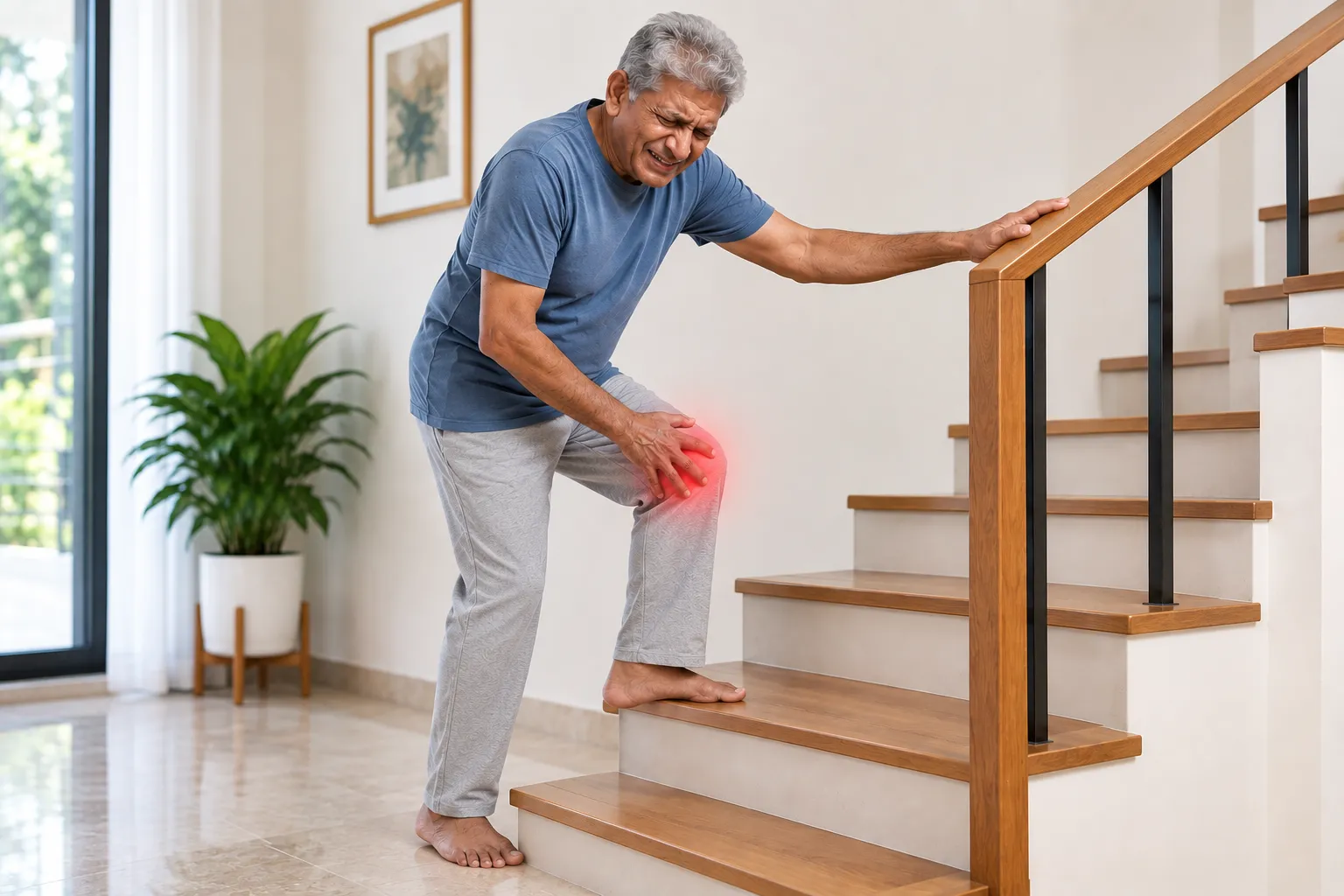
Why Does Knee Pain Get Worse While Climbing Stairs?
Author : Dr. Kunal Patel (MBBS, MS (Ortho),Mch, FIJR, FIAS, (HSS-USA and Endoklinic Germany)
Category : knee
Published Date : September 24, 2026
Table of Contents
Knee pain can become more noticeable while climbing stairs because the movement puts greater demand on the knee than walking on level ground.
You may feel it around the kneecap, inside the joint, or as a dull ache that gets worse with each step. Sometimes it is linked to muscle weakness or overuse, while conditions such as arthritis can also play a role. Occasional discomfort may settle with simple changes, but pain that keeps returning deserves attention.
In this blog, we’ll look at why stairs can trigger knee pain, ways to prevent it, and when it is time to see a specialist.
Why Does Knee Pain Occur While Climbing Stairs?
Knee pain while climbing stairs can happen because stairs place more load on the knee, especially around the kneecap, and can expose problems that may not hurt during normal walking.
A study of 4,673 people found that stair use was the first activity to trigger noticeable knee pain as osteoarthritis symptoms increased.
Here’s why stairs can bring out knee pain even when normal walking feels fine:
1. Knee Arthritis
Changes in the joint can make stair climbing painful and stiff, as bending and putting weight on the knee increases pressure on the affected area, particularly with knee arthritis in old age
2. Muscle Weakness
Weak thigh and hip muscles may make the knee work harder to support your body as you climb, leading to pain or strain. This can be especially noticeable when climbing several flights or after a long period of inactivity.
3. Kneecap Problems
Poor movement of the kneecap can create pressure around the front of the knee, making each step uncomfortable. Pain may also be more noticeable when squatting, sitting for long periods, or getting up from a chair.
As reported by Times of India, pain while going down stairs may signal patellofemoral pain due to increased stress behind the kneecap.
4. Overuse
Repeated stair climbing, running, or sudden increases in activity can irritate the tissues around the knee and trigger pain. Giving the knee enough recovery time can help when discomfort is linked to increased physical activity.
5. Poor Alignment
When the leg does not move in proper alignment, pressure through the knee can become uneven and cause discomfort while climbing. This may also affect how your kneecap tracks as you bend and straighten your leg.
How to Prevent Knee Pain While Climbing Stairs
- Use the handrail: Hold the railing for extra support and to reduce the load on your knees while climbing.
- Take steady steps: Place your whole foot on each step and avoid rushing or taking two steps at once.
- Strengthen your legs: Regularly work on your thigh and hip muscles to give your knees better support.
- Wear supportive shoes: Choose comfortable footwear with good grip and cushioning to reduce unnecessary strain.
- Increase activity gradually: Build up your walking, running, or stair routine slowly instead of suddenly increasing the workload.
When Should You See a Specialist?
Occasional knee pain may settle with rest, but pain that persists or keeps returning should not be ignored. Consider seeing a specialist if:
- Pain persists: Your knee pain continues for more than two weeks despite rest and basic care.
- Swelling increases: You notice increasing swelling, stiffness, or tenderness around the knee.
- Knee locks: You experience knee locking while walking or feel that the joint is getting stuck.
- Knee gives way: Your knee feels unstable or repeatedly buckles during normal activities.
- Daily activities suffer: Pain makes climbing stairs, walking, exercising, or completing your usual activities difficult.
Early evaluation can help identify the cause and prevent a minor problem from becoming a long-term concern. If your symptoms persist or interfere with daily activities, consult a knee pain specialist in Chennai for proper evaluation and treatment.
Final Thoughts
Knee pain while climbing stairs can have several causes, from muscle weakness and overuse to problems affecting the joint or kneecap.
Occasional discomfort may improve with simple changes, but pain that keeps returning should not be ignored. Dr. Kunal Patel, an orthopaedic specialist in Chennai, can help identify the cause of your knee pain and guide you towards suitable treatment.
Paying attention to persistent pain, swelling, stiffness, or instability can help you seek care before the problem affects your daily routine. With the right assessment and knee treatment in Chennai, you can work towards better knee function and more comfortable movement.
FAQs
1. What can make your knees hurt on the stairs?
Stair-related knee pain may stem from arthritis, muscle weakness, kneecap issues, overuse, or problems with leg alignment.
2. Do stairs put too much stress on your knees?
For most people, stairs are fine, although existing knee problems can make the repeated bending and weight-bearing uncomfortable.
3. Why does my knee hurt more when going upstairs?
The knee has to handle greater force and muscle effort when you move upward, which can aggravate an existing problem.
4. What could be behind knee pain when walking downstairs?
Dr. Kunal Patel can assess pain on the way downstairs and determine whether the kneecap, joint, or another knee problem is responsible.
5. Could weak thigh or hip muscles be behind stair-related knee pain?
When the thigh and hip muscles lack strength, the knee may have to take on more of the workload during each step.
6. At what point should stair-related knee pain be checked by a doctor?
Persistent pain, repeated discomfort, swelling, stiffness, or a feeling that the knee may give way warrants a medical evaluation.
7. Does knee arthritis make climbing stairs painful?
Arthritis can make stairs uncomfortable as the knee bends and bears your body weight with every step.
8. Which exercises can reduce the chances of knee pain on stairs?
Strength work for the thighs, hips, and muscles around the knee can help the joint handle everyday movements more comfortably.
9. Who can diagnose knee pain that occurs while using stairs?
A knee specialist in Chennai can examine the joint and determine the underlying reason for your stair-related pain.
10. What treatment options are available for knee pain on stairs?
Your treatment may range from exercises and physiotherapy to medication, injections, or surgery, depending on what is causing the pain.