
MENU
Why Does My Knee Lock or Catch While Walking?
Author : Dr. Kunal Patel (MBBS, MS (Ortho),Mch, FIJR, FIAS, (HSS-USA and Endoklinic Germany)
Category : knee
Published Date : August 27, 2026
Table of Contents
Have you ever been walking normally when your knee suddenly feels stuck or catches for a moment? It can be uncomfortable, and in some cases, even a little alarming. Knee locking or catching can happen for several reasons, ranging from a temporary issue to something that needs medical attention.
The important thing is not to ignore repeated episodes, especially if they are accompanied by pain, swelling, or difficulty moving the knee. Understanding what may be causing the problem can help you know when it is safe to wait and when it is time to get your knee checked.
What Does Knee Locking or Catching Feel Like?
Knee locking or catching can feel like your knee suddenly gets stuck, jams, or briefly stops moving normally while walking or bending. You may feel unable to fully straighten or bend it, as though something is blocking the joint.
Some people notice a sharp pain when the knee catches, while others experience a brief snag that quickly releases. Clicking, popping, stiffness, swelling, or a feeling that the knee may give way can also occur.
As reported by PubMed, a truly locked knee may prevent full movement and can be linked to problems such as meniscal tears, ligament injuries, or loose tissue inside the joint.
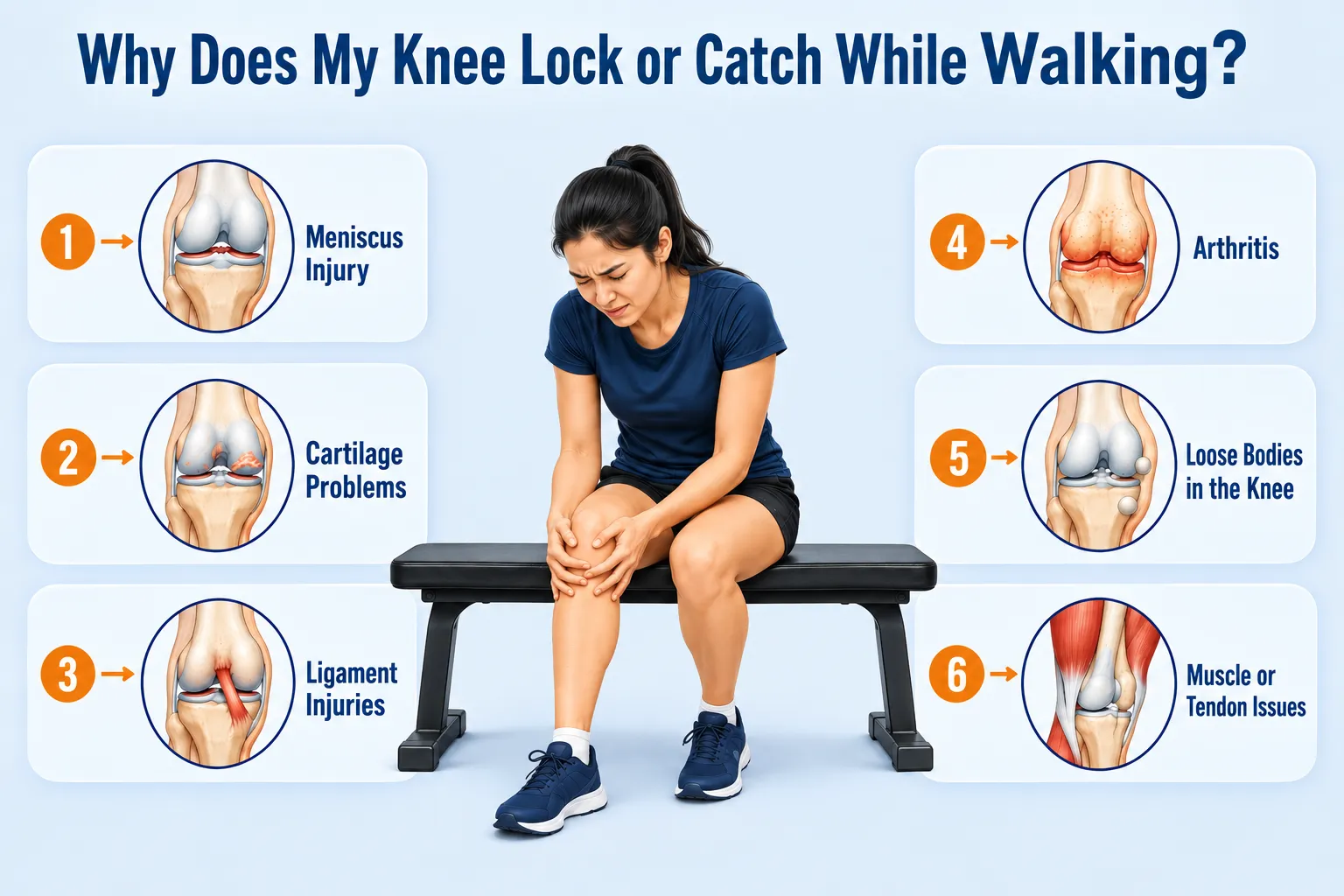
Why Does the Knee Lock or Catch?
1. Meniscus Injury
The meniscus is a tough, cushion-like piece inside the knee that helps absorb shock. When it tears, a loose or damaged section can get caught as the knee moves, causing catching, clicking, or locking. An orthopedic specialist can assess the injury and recommend the right treatment.
2. Cartilage Problems
Cartilage covers the ends of the bones and helps them glide smoothly. When damaged or when a piece breaks loose, it can interfere with movement and make the knee catch or feel stuck. A knee surgeon can determine whether further treatment is needed.
3. Ligament Injuries
Ligaments connect the bones around your knee and help keep the joint stable. When one is injured or damaged, the knee may feel unstable, painful, or catch during certain movements.
4. Arthritis
As reported by the International Journal of Health Sciences, arthritis affects 9.36% of Indians aged 45 and above, with higher prevalence among women and older adults. It can gradually wear down the smooth surfaces inside the knee, making movement less comfortable. Stiffness, swelling, and uneven joint movement can sometimes cause a catching or locking sensation.
5. Loose Bodies in the Knee
Small pieces of bone or cartilage can sometimes become loose inside the knee and move around with activity. If one gets in the way of movement, it may cause sudden catching, locking, or a feeling that something is stuck.
6. Muscle or Tendon Issues
Problems affecting the muscles or tendons around the knee can make movement painful or less smooth. Tightness, irritation, or an injury may sometimes create a catching sensation during walking or bending.
If knee locking keeps happening, an orthopedic consultation in Chennai can help identify the cause and guide the right treatment.
Is Knee Locking While Walking a Serious Problem?
Yes, repeated or true knee locking can be a sign of an underlying knee problem and should not be ignored. An occasional painless catch may be less concerning, but a knee that gets stuck, cannot fully straighten, or repeatedly locks while walking needs proper assessment. Seek medical attention sooner if locking is accompanied by severe pain, swelling, difficulty bearing weight, or the knee giving way.
What Can You Do When Your Knee Locks While Walking?
If your knee suddenly locks while walking, avoid forcing it to move and give it a moment to settle.
- Stop walking: Sit or stand safely and avoid putting unnecessary pressure on the knee.
- Stay still: Do not forcefully bend or straighten the knee to release the lock.
- Use support: Hold onto something stable if you need help maintaining your balance.
- Apply a cold pack: Use a cold pack for short periods if pain or swelling develops.
- Get it checked: Repeated locking or persistent pain warrants an evaluation by a doctor.
Some everyday habits hurting your joints may also contribute to stiffness and discomfort over time. For recurring knee locking, a knee doctor in Chennai can identify the cause and recommend appropriate treatment.
When to See a Doctor
See a doctor if knee locking continues for more than a few days or keeps returning, especially when it affects your walking or daily activities. Seek medical attention sooner if you notice:
- Severe or worsening knee pain.
- Significant swelling around the knee.
- Inability to fully bend or straighten the knee.
- Difficulty walking or putting weight on the leg.
- Repeated locking, catching, or the knee giving way.
- Numbness, weakness, or unusual sensations around the knee.
For recurring symptoms, a knee specialist in Chennai can assess the cause and recommend appropriate treatment.
Final Word
A knee that occasionally catches may not always indicate a serious problem, but repeated locking, pain, swelling, or restricted movement should not be ignored. Paying attention to these symptoms and getting the right assessment can help prevent the issue from affecting your everyday movement.
Avoid forcing a locked knee to move, and seek professional advice when symptoms persist or worsen. If you are dealing with recurring knee locking or unexplained knee pain, consider consulting or visiting Dr. Kunal Patel, the leading orthopedic specialist in Chennai, for a proper evaluation and personalised treatment plan.
FAQs
1. Why does my knee lock while walking?
Knee locking can occur when damaged meniscus, cartilage, or loose tissue interferes with normal joint movement.
2. Is knee locking always a sign of a serious problem?
No, occasional painless catching may be minor, but repeated or painful locking should be evaluated.
3. Can a torn meniscus cause knee locking?
Yes, a torn meniscus can catch during movement and cause the knee to lock or feel stuck.
4. What should I do when my knee suddenly locks?
Stop moving, avoid forcing the knee straight, and seek medical advice if the locking does not settle.
5. Can arthritis make the knee lock?
Arthritis can cause stiffness and uneven movement, sometimes creating a catching or locking sensation.
6. When should I see a doctor for knee locking?
See a doctor when locking keeps returning, lasts several days, or occurs with pain, swelling, or difficulty walking.
7. Can knee locking be treated without surgery?
Treatment depends on the cause and may include rest, exercises, medication, or other options before surgery is considered.
8. Who should I consult for recurring knee locking?
Dr. Kunal Patel can evaluate recurring knee locking and recommend an appropriate treatment plan.
9. Can a knee injury cause sudden locking?
Yes, injuries affecting the meniscus, cartilage, or ligaments can sometimes cause sudden catching or locking.
10. Is knee locking while walking different from knee catching?
Yes, locking usually means the knee becomes stuck, while catching often describes a brief snag that releases quickly.