
MENU
10 Everyday Habits That Could Be Hurting Your Joints
Author : Dr. Kunal Patel (MBBS, MS (Ortho),Mch, FIJR, FIAS, (HSS-USA and Endoklinic Germany)
Category : Orthopedics
Published Date : July 24, 2026
Table of Contents
Your joints help you move comfortably throughout the day, but the way you use them can influence their long-term health. Everyday habits like sitting, lifting, exercising, or even resting with poor posture can gradually place extra stress on your joints.
These small patterns often go unnoticed until they start causing stiffness, pain, or difficulty with movement. Paying attention to your daily routine and making simple adjustments can help reduce excess pressure on your joints.
Healthy movement habits can support stronger joints and allow you to stay active in your everyday life.
Why Daily Habits Affect Your Joints
Your daily habits affect your joints because the way you move, sit, rest, and care for your body influences the pressure placed on them every day. Repeated actions such as poor posture, staying inactive, or using incorrect movement patterns can slowly increase stress on your joints and the surrounding muscles.
Your muscles, ligaments, and tissues work together to protect your joints during daily activities. When unhealthy habits continue for a long time, they may contribute to stiffness, discomfort, reduced flexibility, and difficulty with movement. Building healthier routines can reduce unnecessary strain, support better joint function, and help protect your mobility as you age.
10 Everyday Habits That Hurt Your Joints
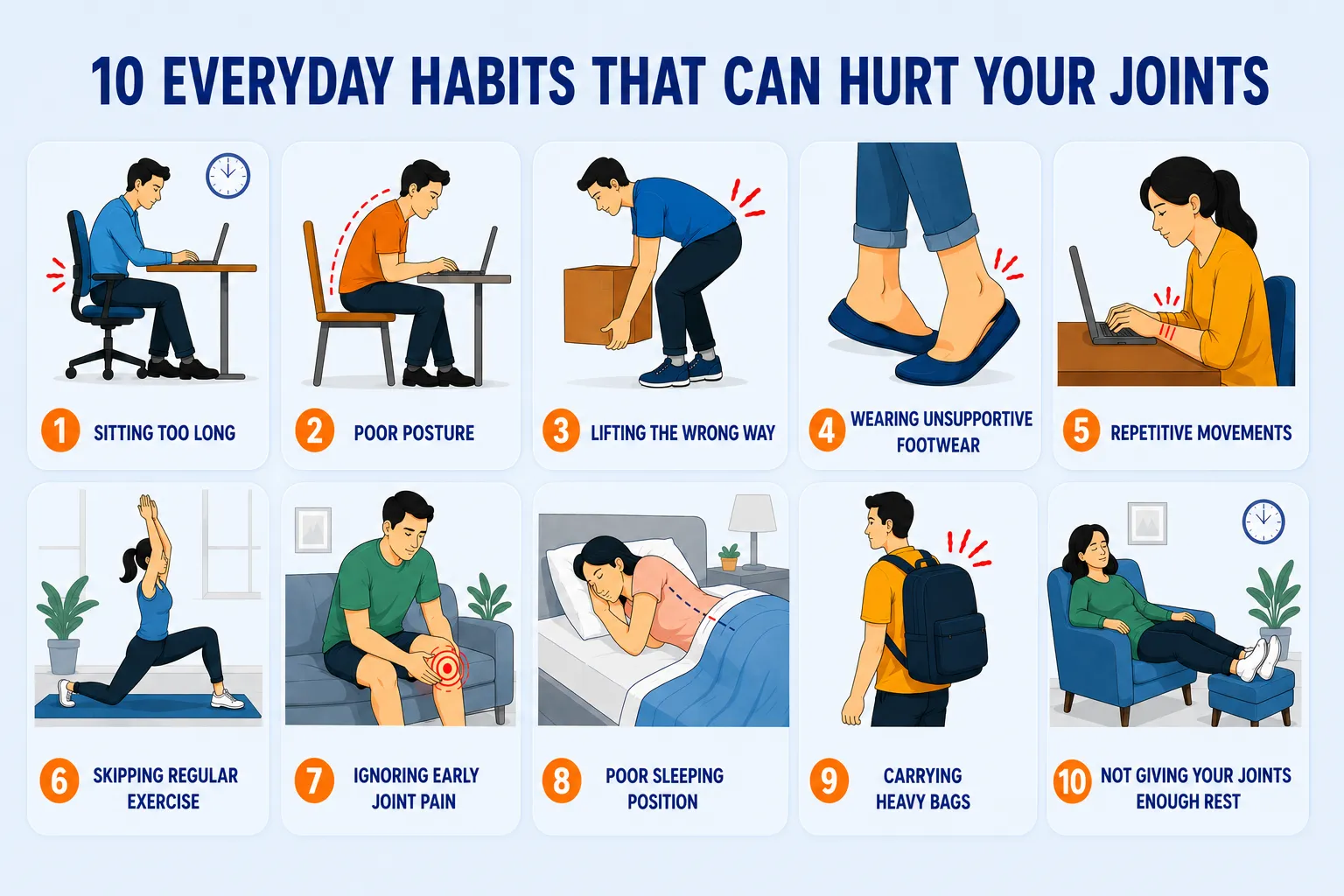
Many joint problems develop slowly because of repeated habits that place extra pressure on your body. Small changes in your daily routine can help you understand what affects your joints and protect them better. Here is how your habits are hurting your joints:
1. Sitting Too Long
Your body needs regular movement to keep your joints active and supported. Sitting in the same position for several hours can reduce muscle activity, increase stiffness, and place extra stress on areas like your back, hips, and knees. As reported by Mayo Clinic, research involving over 1 million people found that sitting for more than eight hours daily without physical activity was linked to serious health risks. Taking movement breaks can help reduce joint strain.
2. Poor Posture
The way you sit, stand, and move affects how pressure is distributed across your joints. Poor posture can place extra stress on certain areas of the body, especially the neck, shoulders, spine, and knees. Over time, this uneven pressure may contribute to discomfort, stiffness, and difficulty with movement. Maintaining better posture helps your muscles and joints work together properly and reduces unnecessary strain during everyday activities.
3. Lifting the Wrong Way
Incorrect lifting techniques can put sudden pressure on your joints and surrounding muscles. Bending from your back instead of using your legs may increase stress on your spine, hips, and knees. Repeatedly lifting objects the wrong way can slowly affect joint function and increase the risk of pain or injury. Practicing safer lifting habits helps your body handle weight more effectively and protects your joints.
4. Wearing Unsupportive Footwear
Your feet provide the foundation for your body’s movement, and improper footwear can affect more than just your feet. Shoes without proper support may change the way you walk and increase stress on your ankles, knees, and hips. Even during activities like running, wrong running shoes cause knee pain by affecting your movement and joint support. Choosing comfortable footwear that supports your daily activities helps maintain better joint alignment and stability.
5. Repetitive Movements
Repeating the same movement for long periods can place continuous pressure on specific joints and muscles. Activities involving frequent bending, typing, lifting, or twisting may cause strain when the body does not get enough rest. Over time, this repeated stress can contribute to irritation, stiffness, or discomfort. Balancing repeated activities with breaks and proper movement habits can help reduce unnecessary joint strain.
6. Skipping Regular Exercise
Regular movement plays an important role in keeping your joints flexible and supported. Skipping exercise for long periods can weaken the muscles that protect your joints, causing them to handle more pressure during daily activities. Lack of movement may also contribute to stiffness and reduced mobility over time. Simple activities like walking, stretching, and strengthening exercises can help maintain better joint function and support healthier movement.
7. Ignoring Early Joint Pain
Minor joint discomfort may seem harmless, but ignoring repeated pain can allow underlying problems to become worse. As highlighted by Times of India, joint pain is not always linked to calcium deficiency and can also occur due to factors like lifestyle habits, muscle weakness, or other underlying causes. Delaying proper care may lead to increased stiffness, reduced activity, or further joint stress. Identifying the cause early can help manage problems effectively and protect long-term joint health.
8. Poor Sleeping Position
Your joints need proper support even while your body is resting. Sleeping in positions that place pressure on your neck, shoulders, spine, or hips can contribute to stiffness and discomfort. Poor alignment during sleep may also increase strain on surrounding muscles and tissues. Maintaining a comfortable sleeping posture and proper support can help your body recover better and reduce unnecessary stress on your joints.
9. Carrying Heavy Bags
Carrying heavy bags regularly can place uneven pressure on your shoulders, spine, hips, and knees. When one side of your body carries more weight, your muscles and joints may work harder to maintain balance. Over time, this repeated stress can contribute to discomfort and posture-related problems. Reducing unnecessary weight and carrying loads properly can help protect your joints during everyday activities.
10. Not Giving Your Joints Enough Rest
Your joints need enough recovery time after repeated movement, exercise, or physical activity. Constant strain without proper rest can overload the surrounding muscles and tissues, increasing the chances of pain and discomfort. Rest allows your body to repair, recover, and maintain better movement quality. Creating a balance between activity and recovery is important for keeping your joints healthy and functioning well.
Simple Daily Habits That Support Healthy Joints
Protecting your joints does not always require major lifestyle changes. Small improvements in your everyday routine can help reduce strain and support healthier movement.
- Stay physically active with regular walking, stretching, or exercises that improve joint flexibility
- Maintain a healthy body weight to reduce extra pressure on weight-bearing joints like the knees and hips
- Follow proper posture while sitting, standing, and working for better joint alignment
- Follow a balanced diet and limit foods that may affect joint health to support your overall joint function
- Use safe lifting techniques and supportive footwear to prevent unnecessary stress on your joints
- Allow enough rest and recovery time so your muscles and joints can repair properly
If joint discomfort affects your daily routine, visiting a joint care clinic can help you understand the cause and take the right steps toward better joint health.
When Should You See a Doctor?
While occasional joint discomfort can improve with lifestyle changes and proper care, some symptoms should not be ignored.
- Your joint discomfort does not settle even after making changes to your routine
- You notice unusual swelling, warmth, or tightness around the affected joint
- Everyday movements like standing, walking, or bending become challenging
- Your joints feel restricted and do not move as freely as before
- The same pain keeps returning even after periods of rest
- You experience weakness or reduced confidence while using the affected joint
- Joint problems begin to interfere with your work, sleep, or normal lifestyle
If these symptoms continue, getting guidance from a joint pain specialist in Chennai can help diagnose the cause and provide the right treatment approach.
Conclusion
Your everyday habits can have a lasting impact on your joint health, comfort, and overall movement. Simple changes such as staying active, maintaining good posture, using proper techniques while lifting, and giving your body enough rest can help reduce unnecessary stress on your joints. Recognizing unhealthy habits early and making better choices can support stronger joints and improve your quality of life.
If joint pain, stiffness, or movement difficulties continue to affect your daily routine, consult Dr. Kunal Patel to understand the underlying cause and receive the right treatment guidance for better joint health.
FAQs
1. What everyday habits can damage your joints?
Poor posture, sitting too long, incorrect lifting, inactivity, and ignoring joint pain can increase stress on your joints over time.
2. Can sitting for long hours cause joint problems?
Yes, sitting for long periods can increase stiffness and weaken the muscles that support healthy joint movement.
3. How does poor posture affect joint health?
Poor posture can create uneven pressure on your joints and contribute to pain, stiffness, or discomfort.
4. Does regular exercise help protect your joints?
Yes, regular exercise helps strengthen supporting muscles, improve flexibility, and maintain better joint function.
5. Why should you not ignore early joint pain?
Ignoring repeated joint pain may allow underlying problems to progress and affect your daily activities.
6. Can carrying heavy bags affect your joints?
Yes, carrying heavy bags regularly can place extra strain on your shoulders, spine, hips, and knees.
7. What simple habits can keep joints healthy?
Staying active, maintaining good posture, using proper movement techniques, and allowing enough rest can support joint health.
8. When should you visit a doctor for joint pain?
You should visit a doctor if joint pain, swelling, stiffness, or movement difficulty continues despite basic care.
9. Which doctor should I visit for joint pain in Chennai?
An orthopedic specialist can diagnose and treat joint pain, injuries, stiffness, and movement-related problems.
10. Who provides treatment for joint pain and related problems in Chennai?
Dr. Kunal Patel helps patients with joint pain, mobility concerns, and orthopedic conditions through personalized care.