
MENU
Can wrong running shoes cause knee pain
Author : Dr. Kunal Patel (MBBS, MS (Ortho),Mch, FIJR, FIAS, (HSS-USA and Endoklinic Germany)
Category : Knee
Published Date : June 22, 2026
Table of Contents
Running should not leave your knees hurting after every run. While many people blame overtraining or injuries, the problem can sometimes be as simple as wearing the wrong running shoes.
Shoes that do not fit well or no longer provide enough support can put extra pressure on your knees and make running less comfortable over time.
The good news is that this is often a problem you can identify and address early. In this article, we'll explain how wrong running shoes can cause knee pain, the signs to look out for, and what you can do to choose the right shoes that better support your knees and overall running comfort.
Can Wrong Running Shoes Cause Knee Pain
Yes, wrong running shoes can cause knee pain.
Running shoes that do not match your foot type, running style, or support requirements can affect the way your feet and legs move. This may increase pressure on the knee joint and surrounding structures, leading to discomfort during or after running. Worn-out shoes can also contribute to knee pain by reducing shock absorption and stability.
Choosing the right running shoes and replacing them when needed can help reduce unnecessary stress on the knees and improve overall running comfort.
How Can Wrong Running Shoes Cause Knee Pain?
According to research, running shoe cushioning and design can influence how impact forces are distributed through the lower limbs during running.
Every time your foot strikes the ground while running, your knees absorb a significant amount of force. The right running shoes help distribute this impact evenly and support the natural movement of your feet and legs. When shoes fail to provide the support your body needs, that force can travel unevenly through the lower limbs, placing extra stress on the knee joint.
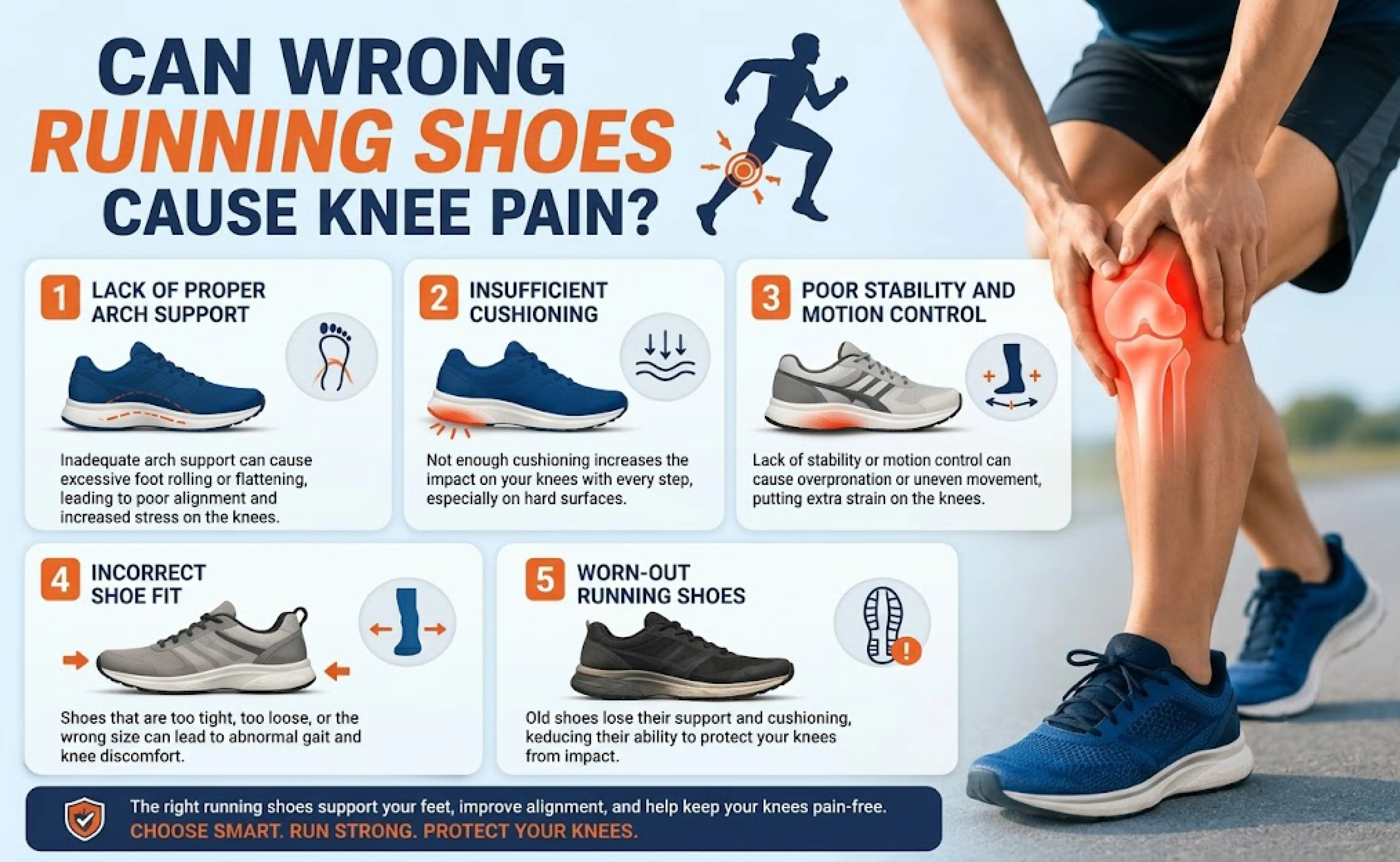
Here are some common footwear-related factors that may contribute to knee discomfort include:
-
Lack of Proper Arch Support
Your arches play an important role in shock absorption and balance. Shoes that do not support your foot type may cause excessive inward or outward foot movement, altering knee alignment and increasing strain on surrounding structures.
-
Insufficient Cushioning
Running generates repetitive impact forces. When cushioning is inadequate or worn out, your knees may absorb more shock with each step, which can contribute to soreness and discomfort over time.
-
Poor Stability and Motion Control
Some runners require additional stability to maintain proper foot positioning during movement. Shoes that are too flexible or fail to control excessive motion may place unnecessary stress on the knees.
-
Incorrect Shoe Fit
Running shoes that are too tight, too loose, too narrow, or too wide can affect your natural gait. Even subtle changes in the way you run can increase pressure on the knee joint and surrounding muscles.
-
Worn-Out Running Shoes
Even high-quality running shoes lose their support and cushioning as they age. Continued use of worn-out footwear can reduce shock absorption and increase the workload on your knees during runs.
Signs Your Running Shoes May Be Contributing to Knee Pain
Not all knee pain is caused by your running shoes, but certain warning signs can indicate that your footwear is no longer providing the support your body needs. If you notice any of the following, it may be time to take a closer look at your shoes:
- Knee pain consistently appears during or after your runs.
- Discomfort reduces when you cut back on running or take a short break.
- Your shoes feel less comfortable, supportive, or cushioned than they once did.
- The soles show noticeable or uneven wear patterns.
- Knee pain started shortly after switching to a new pair of running shoes.
- You feel changes in your running stride, balance, or overall comfort while running.
Where Does Knee Pain From Wrong Running Shoes Usually Occur in the Knee?
Knee pain caused by the wrong running shoes is usually felt around the front of the knee or behind the kneecap. This is one of the most common areas affected when shoes fail to provide enough support or cushioning during a run.
For some runners, the pain may develop along the inner or outer side of the knee. This can happen when the shoes change the way the foot lands on the ground, putting extra stress on certain parts of the knee joint.
The discomfort may start as a mild ache after a run but can become more noticeable during longer runs, climbing stairs, or even everyday activities. If your knee pain appears shortly after changing shoes or wearing an old, worn-out pair, your footwear could be part of the problem.
Common Wrong Running Shoe Mistakes That Can Affect Knee Comfort
Many runners spend time planning their workouts but pay little attention to their shoes. The wrong pair may feel fine at first, but over time, it can make running less comfortable and put extra pressure on your knees. Small mistakes, such as wearing old shoes or choosing a pair that does not fit properly, can make a bigger difference than most people realize. Here are some common running shoe mistakes that may lead to knee discomfort.
-
Running in Old Shoes
Running shoes do not last forever. As they get older, they become less comfortable and provide less protection with every step. This can make your knees work harder during a run.
-
Choosing Looks Over Comfort
A shoe may look great on the shelf, but comfort matters more than appearance. If a shoe feels uncomfortable from the start, it is unlikely to feel better after a long run.
-
Wearing the Wrong Type of Running Shoe
Not every running shoe is made for every runner. A shoe that works well for your friend may not work well for you. Wearing the wrong type can make running feel less comfortable and put extra strain on your knees.
-
Ignoring Signs of Wear and Tear
Take a look at the bottom of your shoes from time to time. If the soles look uneven or heavily worn, the shoes may no longer support your feet the way they should.
-
Waiting Too Long to Replace Shoes
Many runners keep using the same shoes long after they should be replaced. If your shoes feel flat, less comfortable, or noticeably worn out, it may be time for a new pair.
Who Is Most at Risk of Knee Pain From Wrong Running Shoes?
Anyone can experience knee pain from wearing the wrong running shoes, but some runners are more likely to face this problem. Factors such as running experience, foot shape, training habits, and shoe condition can all play a role. These are the following groups that may be at a higher risk of knee pain from improper running shoes:
- New runners who are still getting used to the impact of regular running.
- Long-distance runners who spend many hours on their feet.
- People with flat feet or high arches who may need extra support.
- Runners who often train on hard surfaces like roads and pavements.
- Individuals with a previous knee injury or ongoing knee discomfort.
- Athletes who quickly increase their running distance or intensity.
- Runners who continue using old or worn-out running shoes.
Can Worn-Out Running Shoes Cause Knee Pain?
Yes, worn-out running shoes can contribute to knee pain. As running shoes age, they gradually lose their cushioning and support, making them less effective at reducing the impact of each step. This can place extra stress on the knees, especially during longer runs or frequent training sessions.
Old shoes may also become uneven over time, which can affect the way your feet move and increase discomfort over time. Replacing worn-out running shoes when they begin to lose comfort and support can help reduce unnecessary strain on the knees and improve your overall running experience.
How to Choose the Right Running Shoes for Your Foot Type and Knee Health
Selecting the right running shoes can help improve comfort, reduce unnecessary knee stress, and support a more efficient running experience. Here's how you choose the perfect running shoes:
- Understand your foot type, whether you have neutral arches, flat feet, or high arches.
- Choose running shoes that provide the appropriate level of cushioning and stability for your needs.
- Avoid switching to a completely different shoe style without giving your body time to adjust.
- Replace shoes that consistently leave your feet, knees, or legs feeling sore after runs.
- Test shoes by walking or jogging briefly before making a purchase.
- Select shoes designed for your preferred running surface, such as roads, trails, or tracks.
Choosing the wrong shoes will result in a torn ligament and severe ankle injuries.
Can Changing Wrong Running Shoes Help Reduce Knee Pain?
Yes, changing to the wrong running shoes can help reduce knee pain if your current footwear is placing extra stress on your knees. Shoes that provide the right level of comfort, support, and cushioning can make running feel more natural and comfortable.
Many runners notice improvement when they switch from worn-out or unsuitable shoes to a pair that better meets their needs.
While footwear is not always the only cause of knee pain, choosing the right running shoes can be an important step toward reducing discomfort and supporting healthier, pain-free running.
Recognizing the early signs of injuries from old running shoes can help runners avoid unnecessary discomfort and time away from training.
When Should You See a Knee Specialist for Running-Related Knee Pain?
While occasional soreness after running can be normal, persistent or worsening symptoms should not be ignored.
- Knee pain continues despite changing your running shoes and reducing activity.
- Swelling develops in or around the knee joint.
- The knee feels unstable, weak, or gives way during movement.
- Pain interferes with daily activities such as walking, climbing stairs, or standing.
- You experience locking, catching, or difficulty fully bending or straightening the knee.
- Knee pain persists for several weeks without noticeable improvement.
Final Word
Knee pain while running is not always caused by an injury. In many cases, something as simple as wearing the wrong running shoes can place unnecessary stress on the knees and affect overall comfort. Choosing footwear that matches your needs, replacing worn-out shoes on time, and paying attention to early symptoms can go a long way toward preventing discomfort and supporting healthy movement.
If your knee pain persists despite making these changes, it may be time to seek professional advice. Consult Dr. Kunal Patel to identify the underlying cause of your knee pain and receive personalized treatment recommendations designed to help you return to your daily activities and running routine with confidence.
FAQ’s
1. Can Knee Pain From Running Shoes Go Away on Its Own?
Mild shoe-related knee pain may improve after changing footwear and reducing stress on the knees. Persistent pain should be evaluated by a specialist.
2. How Long Does It Take for Knee Pain to Improve After Changing Running Shoes?
Some runners notice improvement within a few runs, while others may take several weeks, depending on the cause and severity of their symptoms.
3. Can New Running Shoes Cause Knee Pain?
Yes, new running shoes can sometimes cause discomfort if they do not suit your feet or differ significantly from your previous pair.
4. Are Expensive Running Shoes Better for Knee Pain?
Not always. Comfort, fit, and support are more important than price when choosing running shoes.
5. Can Running on Hard Surfaces Make Knee Pain Worse?
Yes, hard surfaces can increase stress on the knees, especially when combined with inadequate footwear.
6. Should I Stop Running If My Knees Hurt?
Mild pain may improve with rest and reduced activity. Persistent or worsening pain should not be ignored.
7. Can Flat Feet Increase the Risk of Knee Pain While Running?
Yes, flat feet may change the way forces move through the legs and increase stress on the knees.
8. What Are the Signs That I Need New Running Shoes?
Reduced comfort, worn soles, and loss of cushioning are common signs that it's time for a replacement.
9. Can the Wrong Running Shoes Cause Pain in Other Areas Besides the Knee?
Yes, unsuitable footwear can also contribute to discomfort in the feet, ankles, hips, and lower back.
10. When Should I See a Knee Specialist for Running-Related Knee Pain?
You should see a knee specialist if your pain persists for several weeks, worsens over time, or interferes with daily activities. Dr. Kunal Patel can evaluate your symptoms, identify the underlying cause, and recommend the most appropriate treatment for long-term knee health.