
MENU
ACL Tear Without Surgery: When Is It Possible?
Author : Dr. Kunal Patel (MBBS, MS (Ortho),Mch, FIJR, FIAS, (HSS-USA and Endoklinic Germany)
Category : orthopedics
Published Date : September 29, 2026
Table of Contents
An ACL tear does not always require surgery, as some injuries can heal or be managed with non-surgical care.
What happens next depends on the extent of the tear, the stability of your knee, and how well you recover with treatment. This can be especially important if you play sports or have an active routine and want to return to it safely. Knowing whether surgery is actually necessary can help you make a more informed decision about your recovery.
In this blog, we’ll look at when an ACL tear may be treated without surgery, how it compares with surgery, and when specialist care is needed.
Can an ACL Tear Heal Without Surgery?
Yes, some ACL tears can heal without surgery, but this depends on the type and location of the tear, how much of the ligament remains intact, and whether the knee stays stable.
A study of 381 ACL ruptures found spontaneous healing in 14.17% of cases after six weeks, with healing more likely in certain tear patterns and when more ligament tissue remained intact.
This suggests that surgery is not automatically required for every ACL injury. However, the knee still needs proper assessment to determine whether non-surgical ACL injury treatment is appropriate.
Rehabilitation, strengthening, and monitoring may be recommended when the knee remains stable and symptoms improve.
ACL Tear Without Surgery vs ACL Surgery
|
Factor |
Non-Surgical Treatment May Be Considered |
Surgery May Be Considered |
|
Tear |
The ligament is partly torn and the knee remains reasonably steady. |
The ligament is completely torn or the knee feels unstable during movement. |
|
Knee stability |
The knee feels secure during everyday activities. |
The knee repeatedly gives way or feels unreliable. |
|
Activity |
Your routine mainly involves walking, cycling, or other lower-demand activities. |
You want to return to sports that involve frequent turning, jumping, or sudden changes in direction. |
|
Other injuries |
The ACL is the main problem and there are no major injuries around the knee. |
Damage to the meniscus, cartilage, or other knee structures is also present. |
|
Rehab response |
The knee becomes stronger and more stable with rehabilitation. |
Instability continues even after appropriate rehabilitation. |
|
Goals |
Your priority is comfortable daily movement and regular activities. |
Your goal is to return to high-demand or competitive sports. |
ACL injuries in sports persons are common because activities involving sudden stops, turns, jumps, and changes in direction can place considerable stress on the ligament.
Can an ACL Tear Be Treated Without Surgery?
Yes, an ACL tear can sometimes be treated without surgery, particularly when the knee remains stable and the person can manage daily activities without repeated giving-way episodes.
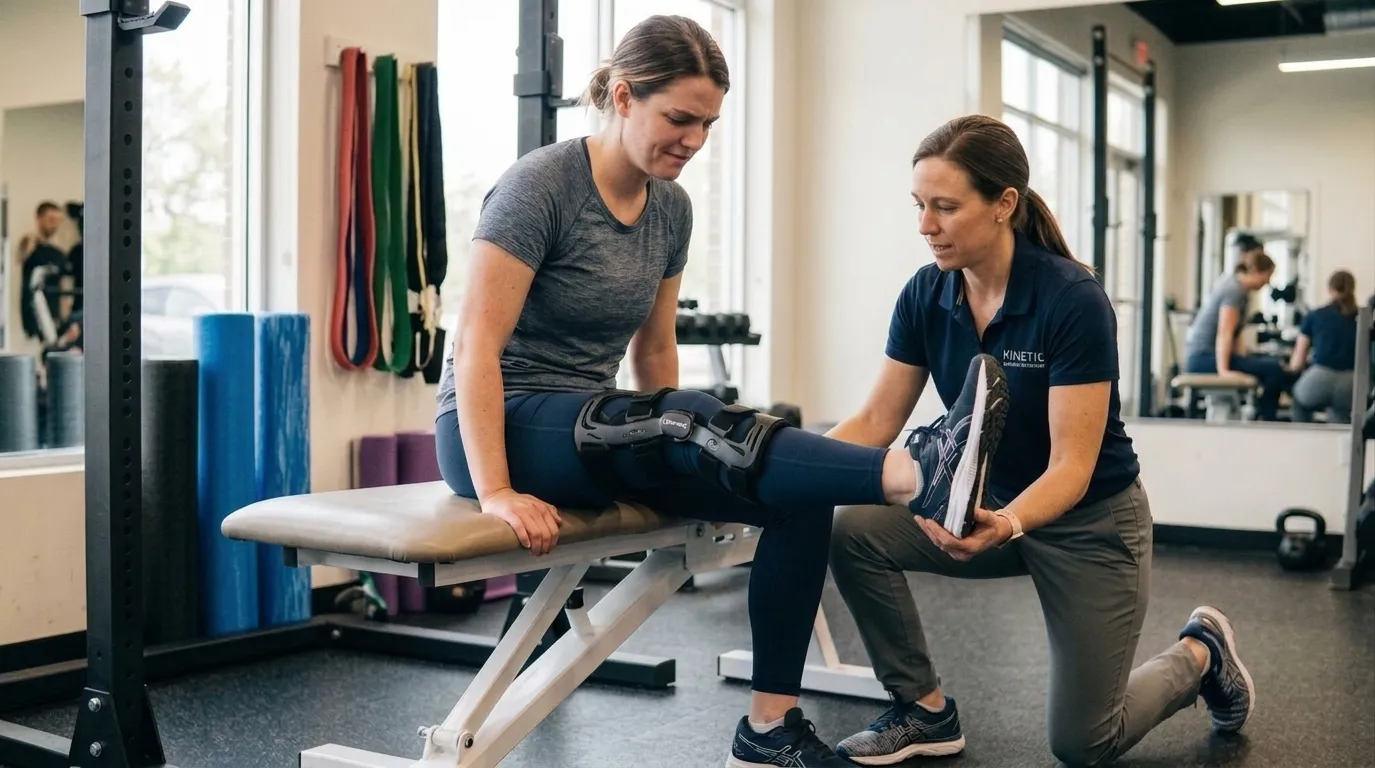
Treatment may involve physiotherapy, muscle strengthening, activity changes, and regular follow-up to track how the knee responds. Non-surgical care may be suitable for some partial tears or people whose activities do not place high demands on the knee.
However, ongoing instability, associated knee damage, or a need to return to pivoting sports may change the treatment plan. As reported by Economic Times, researchers have also identified newer non-surgical approaches that may help relieve knee osteoarthritis pain within weeks
In such cases, ACL reconstruction surgery may be considered to restore knee stability and support a safe return to demanding activities.
When Should You See an Orthopaedic Specialist?
Here is when you need to see an orthopaedic specialist:
- Knee instability: Your knee repeatedly gives way while walking, turning, or changing direction.
- Limited movement: You cannot comfortably bend, straighten, or put weight on the affected knee.
- Persistent symptoms: Pain or swelling continues despite rest and basic care.
- Sports goals: See a Sports orthopaedic doctor in Chennai if you plan to return to running, jumping, or pivoting sports.
- Poor recovery: Weakness or instability continues despite physiotherapy and rehabilitation.
An Orthopaedic doctor for ACL tears in Chennai can assess your knee and help determine the right treatment approach.
Final Thoughts
An ACL tear does not always mean that surgery is the only way forward. Some people may recover with structured rehabilitation, while others may need surgery depending on knee stability, the extent of the tear, and their activity goals.
If you have suffered an ACL injury, visit Dr. Kunal Patel, a renowned ACL doctor in Chennai, for a detailed assessment and guidance on your treatment options.
The right approach should be based on how your knee functions and responds to rehabilitation, rather than the tear alone.
Understanding your options early can help you plan recovery and return to your daily activities or sport safely.
FAQ’s
1. Can an ACL tear heal without surgery?
Yes, some ACL tears may heal or remain stable with non-surgical treatment depending on the injury and knee stability.
2. How long does an ACL tear take to heal without surgery?
Recovery time varies, but rehabilitation may take several months depending on the severity of the tear and progress.
3. What happens if an ACL tear is left untreated?
An untreated ACL tear can cause ongoing instability and may increase the risk of further knee damage.
4. Is surgery always needed for a complete ACL tear?
No, some complete ACL tears may be managed without surgery when the knee remains stable and symptoms improve with rehabilitation.
5. Can I walk with an ACL tear without surgery?
Yes, many people can walk after an ACL tear, although pain, swelling, or instability may make movement difficult.
6. Can physiotherapy heal an ACL tear?
Physiotherapy cannot directly reconnect a completely torn ligament but can improve knee strength, stability, and function.
7. Who should I consult for an ACL tear?
Dr. Kunal Patel can assess your ACL injury and help determine whether non-surgical care or surgery is appropriate.
8. When is ACL surgery recommended?
ACL surgery may be considered when significant instability persists, other knee structures are damaged, or the person wants to return to high-demand sports.
9. Can I play sports with an ACL tear?
Returning to sports with an ACL tear depends on knee stability, rehabilitation progress, and the demands of the sport.
10. What are some signs of an ACL tear?
Common signs include a popping sensation at injury, knee swelling, pain, restricted movement, and a feeling that the knee may give way.