
MENU
Hip Replacement Precautions: Movements You Should Avoid
Author : Dr. Kunal Patel (MBBS, MS (Ortho),Mch, FIJR, FIAS, (HSS-USA and Endoklinic Germany)
Category : hip
Published Date : August 30, 2026
Table of Contents
Having a hip replacement can bring back the freedom to walk, move, and enjoy everyday life with much less pain. But during the early weeks, your new hip needs a little extra care while the muscles and tissues around it heal.
This does not mean you have to stay still or be afraid of movement. In fact, gentle, safe movement is an important part of recovery.
The key is knowing which positions and movements to avoid for now, and giving your body enough time to regain strength and stability before returning to your usual routine.
What Movements Should You Avoid After Hip Replacement?
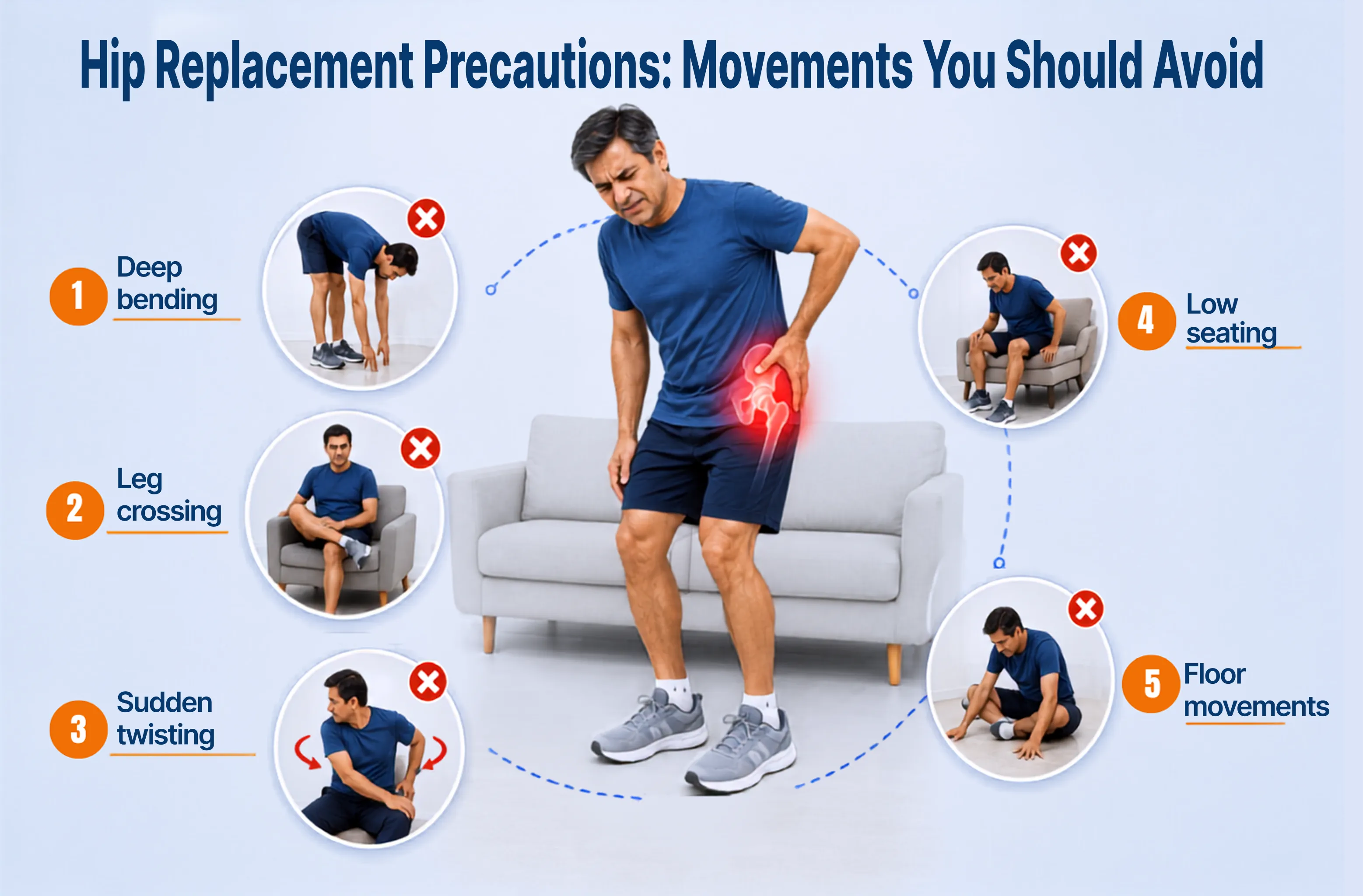
After a hip replacement, avoid movements that put excessive strain on the new joint, especially during the early weeks. Do not bend your hip too far, cross your legs, twist suddenly, or turn your operated leg too far inward or outward.
Low chairs and deep squatting should also be avoided until your doctor says they are safe. These precautions help protect the healing tissues and reduce the risk of the hip moving out of position.
As reported by PubMed Central, following movement precautions after hip replacement can help protect the joint during early recovery.
Why Movement Precautions Matter After Hip Replacement
Movement precautions are important because they protect your new hip while the surrounding tissues heal:
- Protects the joint: Avoiding risky positions can reduce the chance of the new hip slipping out of place.
- Supports healing: Limiting excessive bending and twisting gives the tissues around the hip time to strengthen.
- Improves stability: Following precautions helps the muscles gradually regain their ability to support the hip.
- Encourages safe movement: Precautions do not mean staying still; walking and prescribed exercises remain important during recovery.
- Builds confidence: Knowing which movements are safe can help you return to everyday activities without unnecessary fear or strain.
Research from the University Hospital of Cologne found that about 2% of patients experienced hip dislocation within a year after primary total hip replacement, highlighting the importance of following movement precautions.
Movements to Avoid After Hip Replacement
During early recovery, avoid movements that place the new hip in awkward or extreme positions:
- Deep bending: Avoid leaning too far forward or bringing your knee high toward your chest.
- Leg crossing: Keep your legs apart instead of crossing your knees or ankles.
- Sudden twisting: Turn your whole body rather than pivoting sharply on the operated leg.
- Low seating: Avoid very low chairs or sofas that force your hips into a deep bend.
- Floor movements: Avoid squatting, kneeling, or reaching down from the floor until your surgeon clears you.
These precautions are especially important in the early weeks while the tissues around the new hip heal. The benefits of robotic-assisted hip replacement can make the procedure more precise and recovery smoother.
Safer Movement Tips After Hip Replacement
A few practical changes can make everyday movement easier while your hip regains strength:
- Take short walks: Walk little and often, increasing your distance only when it feels comfortable.
- Keep support close: Use your walker or crutches until you can move confidently without them.
- Sit higher: Choose chairs with a firm seat and enough height to avoid deep bending.
- Rearrange essentials: Keep medicines, clothes, and frequently used items within easy reach.
- Stay consistent: Complete the exercises recommended by your physiotherapist rather than doing too much too soon.
- Turn carefully: Take small steps when changing direction instead of twisting suddenly on the operated leg.
For personalised guidance throughout recovery, a leading orthopedic hospital in Chennai can help you follow movement precautions suited to your surgery and progress.
When to See a Doctor
During the first 6–12 weeks after hip replacement, contact your doctor if recovery is not progressing as expected or new symptoms appear.
- Increasing pain that does not improve with rest or prescribed medication.
- Fever, chills, increasing redness, warmth, or discharge around the wound.
- Sudden swelling, pain, warmth, or tenderness in one leg or calf.
- Sudden hip pain with difficulty moving or putting weight on the operated leg.
- New numbness, weakness, or unusual changes in the operated leg.
- Chest pain, sudden breathlessness, or dizziness requires immediate medical attention.
For personalised hip replacement recovery in Chennai, consult your orthopaedic surgeon promptly when something feels unusual rather than waiting for it to worsen.
Final Word
Hip replacement can restore movement and make everyday activities much easier, but a safe recovery depends on how you move during the healing period.
Avoiding deep bending, crossing your legs, sudden twisting, and other risky positions can help protect the new joint while your body recovers. With the right guidance and gradual progress, most people can confidently return to their normal routines.
For personalised care and expert guidance, consult Dr. Kunal Patel, a leading hip replacement specialist in Chennai, who specialises in hip and joint replacement procedures.
FAQs
1. How long should I follow hip replacement precautions?
Follow your surgeon’s precautions for the period advised, as recovery timelines can vary from person to person.
2. Can I cross my legs after hip replacement?
Avoid crossing your legs until your surgeon confirms that it is safe to do so.
3. Can I bend down after hip replacement?
Avoid deep forward bending during early recovery and use tools that reduce the need to reach down.
4. Is walking good after hip replacement?
Yes, short and gradual walks are generally encouraged to rebuild mobility and endurance.
5. Can I sleep on my side after hip replacement?
You may be able to sleep on your side once your surgeon confirms that the position is safe for your recovery.
6. When can I return to normal activities after hip replacement?
Many daily activities can resume within a few weeks, but the exact timeline depends on your recovery and your surgeon’s advice.
7. What should I avoid sitting on after hip replacement?
Avoid very low chairs or sofas that force your hips into a deep bend.
8. Who should I consult for hip replacement recovery?
Dr. Kunal Patel can provide personalised guidance based on your surgery and recovery progress.
9. Can I exercise after hip replacement?
Yes, follow the exercises recommended by your doctor or physiotherapist to gradually restore strength and movement.
10. When should I contact my doctor after hip replacement?
Contact your doctor for worsening pain, wound changes, unusual swelling, fever, difficulty walking, or other new symptoms.