
MENU
What Is the Robotic Knee Replacement Protocol? A Step-by-Step Patient Guide
Author : Dr. Kunal Patel (MBBS, MS (Ortho),Mch, FIJR, FIAS, (HSS-USA and Endoklinic Germany)
Category : Knee
Published Date : June 30, 2026
Table of Contents
Being told that you may need a knee replacement can bring up a lot of questions, especially if you're unsure about what the process involves. From preparing for surgery to understanding recovery and rehabilitation, knowing what to expect can help you feel more confident and informed throughout your treatment journey.
Robotic knee replacement has become an increasingly advanced option for patients with severe knee pain and joint damage. However, successful outcomes depend on more than just the procedure itself.
Following a structured protocol before, during, and after surgery plays an important role in recovery. In this guide, we'll walk you through the robotic knee replacement protocol, explain each stage of the process, and share what patients can expect along the way.
What Is a Robotic Knee Replacement Protocol?
A robotic knee replacement protocol is a structured plan that guides patients through every stage of robotic knee replacement surgery, from pre-operative preparation to recovery and rehabilitation. It is designed to help ensure that patients receive the right care, instructions, and support before, during, and after the procedure.
The protocol typically includes medical evaluations, imaging scans, surgical planning, the knee replacement procedure itself, post-operative care, and an individualized rehabilitation program aligned with recovery goals.
Why Following a Robotic Knee Replacement Protocol Matters
A robotic knee replacement protocol helps guide patients through each stage of treatment, from preparation to recovery. Following the recommended steps can support a smoother recovery:
- Helps Surgeons Plan More Accurately: Detailed scans and assessments help surgeons create a treatment plan that is tailored to your knee and individual needs.
- Supports a Safer Recovery: Following your doctor's instructions after surgery can help reduce the risk of complications and support proper healing.
- Improves Movement and Strength: A structured rehabilitation plan helps you gradually regain strength, flexibility, and confidence in your daily activities.
- Keeps You on the Right Path: Knowing what to expect at each stage of recovery can help you stay motivated and committed to your treatment plan.
- Supports Better Long-Term Results: Following the recommended protocol can help improve knee function, increase mobility, and enhance your overall quality of life.
Many patients choose robotic surgery in Chennai for its precision and individualized treatment approach.
Step-by-Step Robotic Knee Replacement Protocol
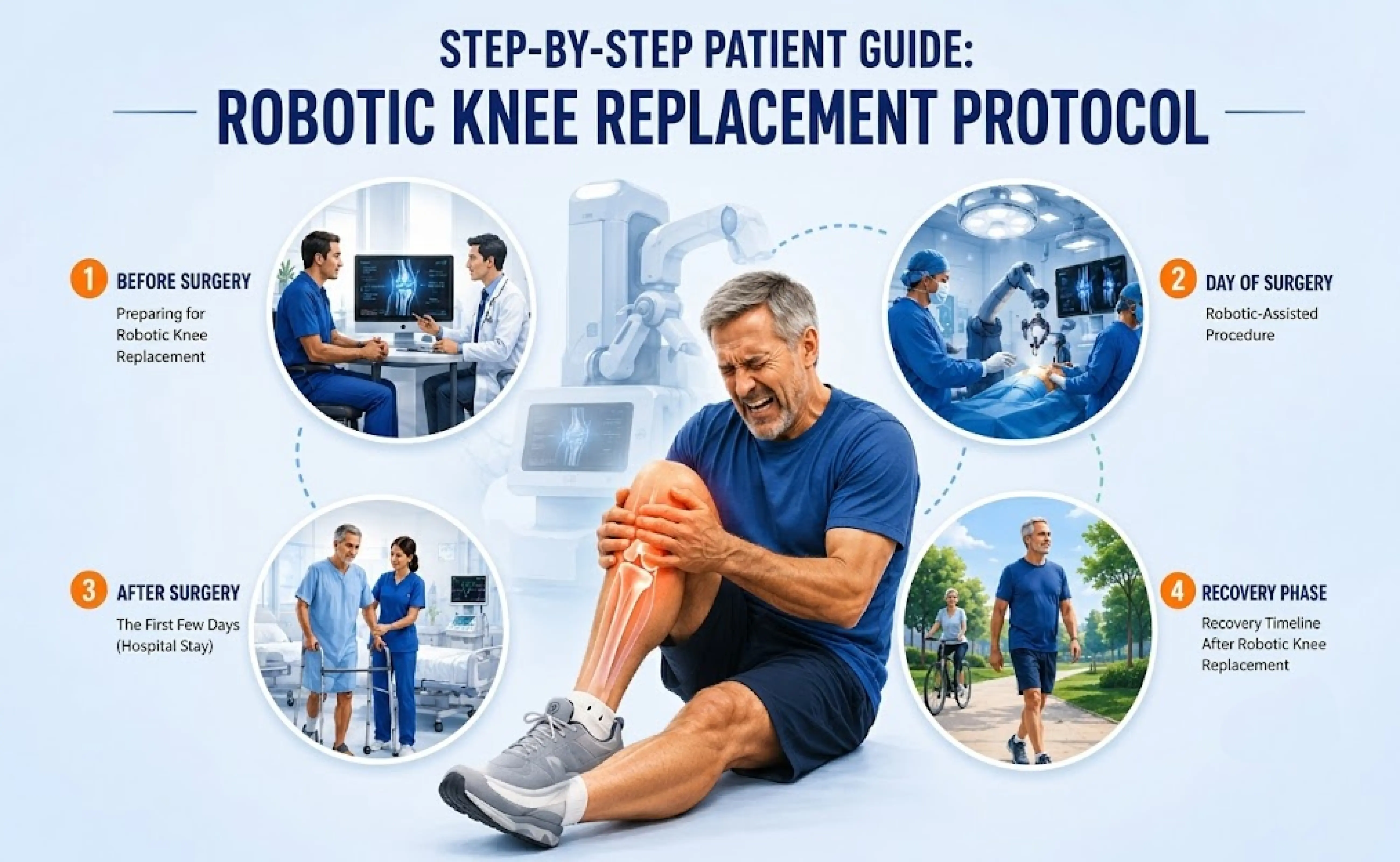
Understanding the robotic knee replacement process can help patients prepare for surgery and recovery. Below is a step-by-step overview of what to expect:
1. Before Surgery: Preparing for Robotic Knee Replacement
Preparation begins well before the day of surgery. Patients typically undergo a detailed evaluation that may include physical examinations, medical tests such as CT scans or X-rays, and a review of their medical history.
These assessments help surgeons create a personalized surgical plan based on the patient's knee anatomy. Patients may also receive guidance on medications, exercises, and home preparations to support recovery after surgery.
2. Day of Surgery: What to Expect
On the day of surgery, patients are admitted to the hospital and prepared for the procedure. During robotic knee replacement, advanced technology assists the surgeon in planning and executing precise bone cuts and implant positioning based on the patient's anatomy. After the procedure, patients are closely monitored as the effects of anesthesia fade, and early recovery begins under medical supervision.
3. After Surgery: The First Few Days After Robotic Knee Replacement
The first few days after surgery focus on pain management, mobility, and early rehabilitation. Many patients are encouraged to begin gentle movement and walking with assistance soon after the procedure.
Healthcare teams monitor recovery progress, provide instructions on wound care, and help patients safely perform basic daily activities. Early movement plays an important role in supporting circulation, mobility, and confidence during recovery.
4. Recovery Phase: Recovery Timeline After Robotic Knee Replacement
Recovery continues over the following weeks and months as patients gradually rebuild strength, flexibility, and knee function. Physical therapy and rehabilitation exercises are often key components of this stage.
While recovery timelines vary, many patients notice steady improvements in mobility and comfort as they follow their rehabilitation plan. Consistency, patience, and regular follow-up appointments can help support a smoother recovery and long-term outcomes.
Why Rehabilitation Is Essential After Robotic Knee Replacement
Rehabilitation helps patients recover strength, movement, and function after robotic knee replacement. Here’s how it plays a key role in achieving the best possible outcome from surgery:
1. Restores Range of Motion
After knee replacement surgery, stiffness can make everyday movements challenging. Rehabilitation exercises help improve knee flexibility and range of motion, making activities such as walking, climbing stairs, and sitting more comfortable over time.
2. Rebuilds Strength Around the Knee Joint
Muscles surrounding the knee often become weaker due to long-term pain, reduced activity, and surgery. A structured rehabilitation program helps strengthen these muscles, providing better support and stability for the new knee joint.
3. Improves Walking and Movement Patterns
Many patients develop compensatory walking habits before surgery because of chronic knee pain. Rehabilitation helps retrain movement patterns and gait mechanics, allowing patients to move more naturally and confidently during daily activities.
4. Supports Long-Term Surgical Outcomes
Successful knee replacement outcomes depend on more than the procedure itself. Consistently following a rehabilitation plan can help patients maximize mobility, improve function, and get the greatest long-term benefit from their robotic knee replacement.
Tips to Support a Smooth Recovery After Robotic Knee Replacement
The right habits after robotic knee replacement can support healing and help you recover more confidently. Here are a few tips you can consider:
- Stay consistent with your prescribed physical therapy and rehabilitation exercises.
- Follow your medication and wound care instructions as directed by the doctors.
- Walk and stay active within the limits recommended by your surgeon or physiotherapist.
- Attend all follow-up appointments to monitor recovery progress and knee function.
- Maintain a balanced diet and stay hydrated to support healing and recovery.
- Report persistent swelling, worsening pain, or unusual symptoms to your healthcare provider.
When Should You See a Knee Replacement Specialist?
It is advisable to consult a knee replacement specialist if one experiences persistent, severe knee pain that does not improve with treatments such as medication, physical therapy, or injections. Additionally, it may be necessary to seek specialized care if knee pain hinders the performance of everyday activities. Symptoms such as stiffness, reduced range of motion, or changes in the shape or alignment of the knee can also indicate the need for further evaluation. A knee replacement specialist can assess your condition, discuss available treatment options, and determine whether robotic knee replacement may be the most suitable approach for your needs.
Final Word
Understanding the robotic knee replacement protocol can help patients feel more prepared and confident throughout their treatment journey. From pre-operative planning and surgery to rehabilitation and long-term recovery, each stage plays an important role in achieving the best possible outcome.
Following the recommended protocol, staying committed to rehabilitation, and maintaining regular follow-up care can support improved mobility, function, and quality of life. If you're considering robotic knee replacement or exploring treatment options for chronic knee pain, Dr. Kunal Patel can provide a comprehensive evaluation and personalized care plan. With the right guidance and support, patients can take meaningful steps toward improved knee health and mobility.
FAQ’s
1. What is a robotic knee replacement protocol?
A robotic knee replacement protocol is a structured plan that guides patients through preparation, surgery, recovery, and rehabilitation.
2. How does robotic knee replacement differ from traditional knee replacement?
Unlike traditional knee replacement, robotic knee replacement provides real-time guidance that can improve implant positioning and surgical accuracy.
3. How long does recovery take after robotic knee replacement?
Recovery timelines vary, but many patients continue improving over several weeks to months following surgery.
4. When can I start walking after a robotic knee replacement?
Many patients begin walking with assistance shortly after surgery under medical supervision.
5. Why is rehabilitation important after robotic knee replacement?
Rehabilitation helps restore strength, mobility, range of motion, and overall knee function.
6. Is robotic knee replacement suitable for severe knee arthritis?
Robotic knee replacement may be considered for patients with advanced knee arthritis and significant joint damage.
7. What tests are performed before robotic knee replacement surgery?
Pre-operative evaluations may include physical examinations, imaging scans, and a review of medical history.
8. Can robotic knee replacement improve mobility?
Many patients experience improved mobility and function when recovery and rehabilitation progress as planned.
9. When should I consult a knee replacement specialist?
You should seek specialist evaluation when knee pain persists despite physical therapy, medications, or injections.
10. How do I know if robotic knee replacement is right for me?
Dr. Kunal Patel can assess your condition and recommend the most appropriate treatment options based on your needs.