
MENU
What Is an ACL Injury and Why Is It Common in Sports Persons?
Author : Dr. Kunal Patel (MBBS, MS (Ortho),Mch, FIJR, FIAS, (HSS-USA and Endoklinic Germany)
Category : Knee
Published Date : May 25, 2026
Table of Contents
Staying active through sports and fitness activities is one of the best ways to maintain good health. But there are times when athletes and sports enthusiasts sustain injuries to muscles, joints, and bones that can disrupt movement and function. One of the most common knee-related sports injuries is an ACL injury.
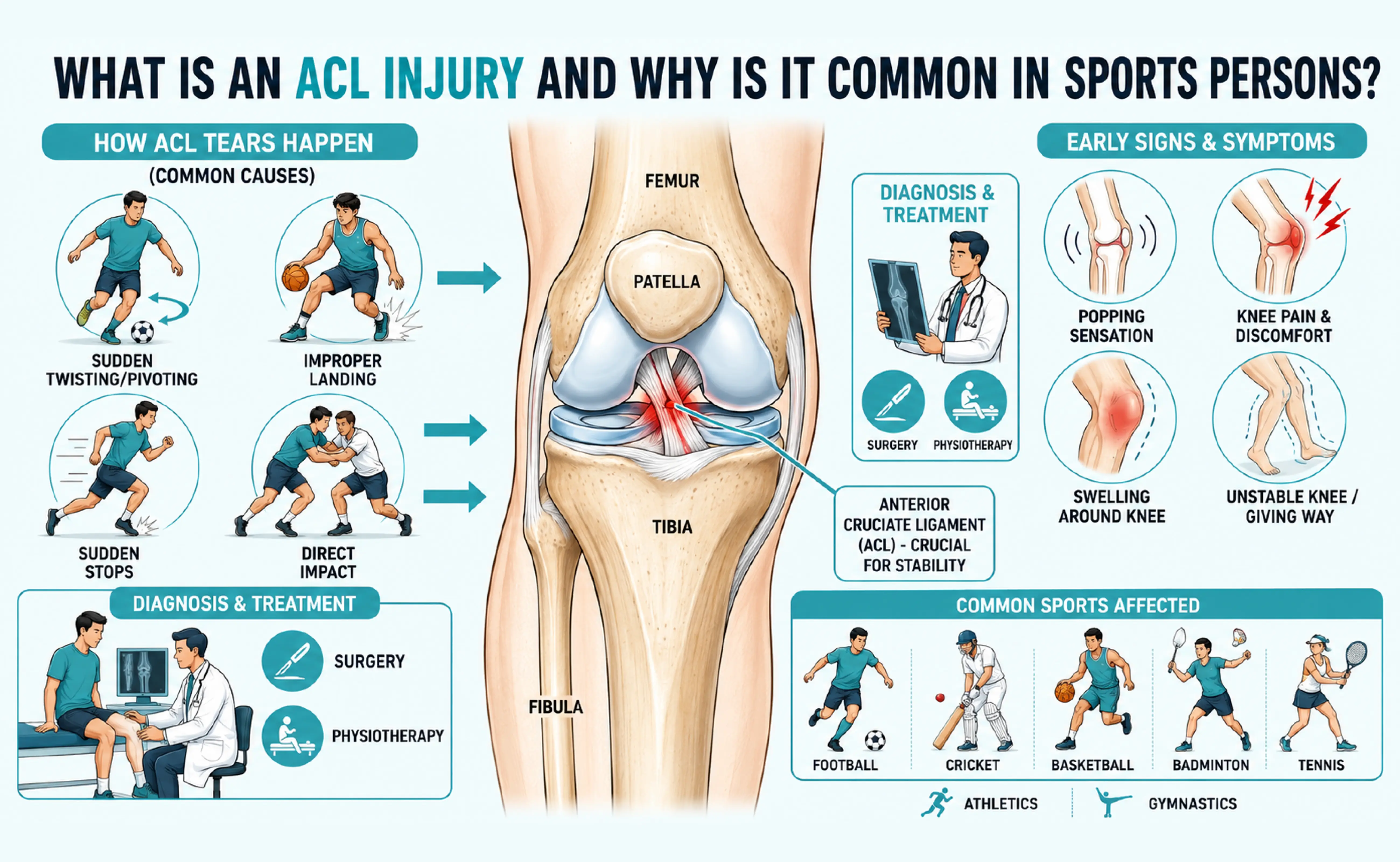
The Anterior Cruciate Ligament (ACL) is an important ligament in the knee whose function is to maintain stability and balance during the movement of the knee. It is especially important when someone is running, jumping, twisting, or changing direction rapidly. Knee anterior cruciate ligament (ACL) injuries are common among athletes and sportspeople due to the repetitive loading of the knees.
The good news is that with early diagnosis, proper treatment, and guided rehabilitation, many individuals are able to return to their active lifestyle safely and confidently.
ACL Injuries in Sports Persons
ACL injuries are commonly seen in athletes who participate in fast-paced or high-intensity sports activities. The severity of the injury can range from a minor ligament strain to a complete tear.
An increase in sports-related knee injuries has also been observed due to the rising number of people participating in sports events like Kabaddi matches, fitness training, football, and even cricket in India. ACL tears can happen to the professional athlete and the recreational sports player.
According to a report by ResearchGate, ACL tears are seen more frequently in young athletes and active individuals ranging in India from 18 to 27 years of age. These injuries are more frequently reported in high-contact sports such as Kabaddi and football, where sudden twisting, jumping, and rapid direction changes place extra stress on the knee joint.
The knee joint is one of the most mobile joints in the body. The ACL is more at risk of being hurt during sports when the movement involves sudden changes in direction, jumping, or awkward landings.
Individuals participating in regular sporting activities must monitor knee discomfort at an early stage to prevent further damage and facilitate a rapid recovery.
Why Are ACL Injuries Common in Athletes and Sports Persons?
Sports activities include rapid, frequent movements, which put stress on the knee joint, which is why it is more common in athletes than in non-athletes.
The following are some of the more common exercises that can increase pressure on the ACL:
· Sudden stopping while running
· Quick turning or pivoting
· Jumping and landing forcefully
· Rapid side-to-side movement
· Direct contact during sports
They are typically used by athletes during high-impact and repetitive activities, leading to a potential increase in strain over time. Other times, muscles may become imbalanced, a person may not warm up correctly before their workout, or they may use bad technique when performing a movement.
Sports That Commonly See ACL Injuries
ACL injuries can occur in various sports, especially those that involve rapid movements, jumping, and quick changes in direction. Some commonly associated sports include:
· Football
· Cricket
· Basketball
· Badminton
· Kabaddi
· Volleyball
· Tennis
· Athletics
· Gymnastics
Athletes who train on rough surfaces or uneven terrain regularly can strain their knees in this manner as well. People doing intense workout routines without proper training or supervision may also place extra stress on the knee, which can affect the ACL.
With timely care from the best knee hospital in Chennai, athletes and active individuals can manage knee discomfort early and continue their daily activities and sports with better joint support and confidence.
Common Causes of ACL Injuries
In recent years, ACL injuries have increasingly been reported among people above the age of 45 as well. Studies by PubMed Central have shown that the number of reported ACL injury cases increased from 40 per 100,000 people in 1994 to 72 per 100,000 people by 2005. There are a variety of ways for an ACL injury to occur. Damage often takes place through indirect contact. Common reasons are:
· Sudden twisting movements: Rapid turns on the foot with the foot on the ground can overwork the ligament.
· Improper landing: The knee can be stressed when landing awkwardly from a jump.
· Sudden stops while running: Stopping abruptly when participating in sports activities could impact knee stability.
· Direct impact: An impact or collision can occur while playing sports, resulting in damage to the ligament.
· Weak muscle support: A lack of support for the knee joint may result from weak thigh or hamstring muscles.
· Lack of warm-up: Skipping warm-up or stretching exercises before sports activities can increase stiffness in the muscles and joints, leading to added pressure on the knees.
Early Signs and Symptoms of an ACL Injury
The symptoms of an ACL injury may vary from person to person. Some people might feel pain right away; others may feel pain slowly as they move. Common signs include:
· A "popping" sensation at the knee when moving
· Knee pain or discomfort
· Swelling around the knee area.
· Difficulty walking comfortably
· A sense of an unstable knee
· Limited range of movement
· Difficulty continuing sports activities
When these signs persist for a few days or become distracting for the activities of daily living, it is important to seek medical evaluation by the top knee specialist in Chennai.
How ACL Injuries Are Diagnosed
A timely diagnosis aids in planning the appropriate treatment and enables more effective recovery. The orthopedic doctor generally starts with:
· Physical examination: The doctor checks the knee for stability, range of movement, and signs of swelling or discomfort.
· Medical history: Educating about the nature of sports-related injury and injury mechanics assists in assessment.
· Imaging tests: Doctors may recommend imaging tests such as an MRI scan to examine the ligaments closely and identify any related knee concerns. X-rays also might be suggested to check the bone alignment and the condition of the joints.
Treatment Options for ACL Injuries
Treatment varies by age, activity level, severity of injury, and lifestyle goals.
Non-Surgical Treatment
In certain cases, with conservative treatment, an ACL injury can be treated by:
The condition can be managed with rest and activity modification.
· Ice application: Helps reduce swelling and provides comfort to the affected knee area after physical activity or injury.
· Physiotherapy exercises: Improve muscle strength, flexibility, and knee stability to support smoother movement during recovery.
· Knee support braces: Provide additional support to the knee joint and may help improve confidence during walking or sports activities.
· Strengthening programs: This may be appropriate for those who have stable knees and lower physical needs.
Surgical Treatment:
Active individuals and athletes may be advised to undergo ACL reconstruction surgery to improve knee stability and safely return to sports and physical activities.
Today's orthopedic procedures are directed at enhancing comfort, mobility, and recovery. Patients seeking specialised care from the best orthopedic hospital in Chennai often benefit from personalised treatment plans designed around their activity levels and recovery goals.
Recovery and Rehabilitation After an ACL Injury
Recovery should be an important part of ACL treatment. Effective rehabilitation will lead to strengthened, increased flexibility, balance, and confidence during movement. Rehabilitation may involve:
· Guided physiotherapy
· Muscle strengthening exercises
· Balance training
· Practice in controlled sports movement.
· Gradual return-to-activity plans
The length of recovery depends on the kind of treatment received and how physically active a person is. Consistency with the rehabilitation exercises is a crucial component to maintaining long-term knee stability. Most people can slowly transition back to sports and fitness with medical supervision.
Tips to Reduce the Risk of ACL Injuries
Although not every injury is preventable, some behaviors or actions might reduce the risk of ACL injury.
· Warm up properly: Stretching exercises and warm-up exercises get the muscles and joints ready for activity.
· Strengthen leg muscles: Strong thigh and hamstring muscles provide better knee support.
· Correct movement and techniques: Correct jumping, landing, and turning offer less stress on the knees.
· Wear appropriate footwear: Appropriate shoes are used to promote balance and control of movement.
· Avoid overtraining: Allow the body enough rest so muscles and ligaments can repair.
· Maintain flexibility: Frequent stretching promotes greater ease of movement and softness.
When Should You Consult an Orthopedic Specialist?
See an orthopedic specialist if:
· Knee pain persists for a few days.
· This swelling does not get better.
· Walking becomes uncomfortable.
· Knee feels unstable during motion.
· Sports performance is impacted.
· Repeated knee pain while active.
Prompt treatment can help avoid worsening joint stress and aid in recovery. If someone is interested in advanced treatment for knee injuries, he or she might even want to contact the best ACL surgeon in Chennai and get the proper evaluation and guidance for the treatment.
Conclusion
ACL injuries are very prevalent among athletes or sporting persons, for sports activities may involve rapid movements, jumping, and abrupt changes in direction that cause stress on the knee joint.
While an ACL injury may impact movement and athletic function, timely detection and targeted treatment can aid in a successful recovery. With the use of contemporary orthopedic treatment, physical therapy, and rehabilitation plans, many people are able to safely resume their active lifestyles.
Early signs of problems and regular exercise routines can make a difference in protecting your knee's health and stability for the future. Connect with our doctors to start your treatment now.
FAQ’s
1. What does ACL stand for?
ACL refers to the Anterior Cruciate Ligament, which is a crucial connecting ligament of the knee joint.
2. Can ACL injuries heal without surgery?
Depending on the severity, a mild case can be treated with a combination of physiotherapy, exercises, and activity modification. Treatment will depend on the severity of the injury.
3. Which sports have a higher risk of ACL injuries?
Football, basketball, badminton, cricket, volleyball, and kabaddi are examples of sports where ACL injuries are common.
4. How long does ACL recovery usually take?
The recovery period can differ from person to person depending on the treatment approach, overall physical health, and how well rehabilitation progresses. You and your doctor will be able to plan together, given that everyone has unique targets of recovery.
5. Can physiotherapy help after an ACL injury?
Yes. After an ACL injury, physiotherapy is a crucial component in restoring the knee's stability, flexibility, mobility, and strength.
6. When should I see a doctor for knee pain?
If knee pain does not resolve, or the swelling does not go away, or getting around makes it difficult to do your normal activities or the sport you play, seek help from a professional.
7. Can ACL injuries happen without direct contact?
Yes. A lot of ACL tears happen when there is no direct contact whatsoever, particularly when making rapid turns, movements, and jumps while playing sports.
8. Is it possible to return to sports after an ACL injury?
Many athletes and active people can gradually return to sports and physical activity with treatment, rehabilitation, and proper medical advice.
9. Are ACL injuries more common in young athletes?
ACL injuries are commonly seen in young and active individuals because they participate in high-energy sports and activities that involve rapid knee movements.
10. How can I keep my knees strong during sports activities?
Strengthening tests, warm-up, stretching, balanced training, and correct sports techniques may be useful in maintaining knee health and minimizing stress to the joints.