
MENU
What Every Athlete Should Do Immediately After a Sports Injury?
Author : Dr. Kunal Patel (MBBS, MS (Ortho),Mch, FIJR, FIAS, (HSS-USA and Endoklinic Germany)
Category : Orthopedics
Published Date : June 29, 2026
Table of Contents
A sports injury can be frustrating, especially when it happens during training, competition, or an activity you've prepared for. At the moment, it's common to feel unsure about what to do next or whether the injury is serious enough to require medical attention.
Understanding how to respond appropriately after a sports injury can help reduce the risk of further damage and support a safer return to activity. In this article, we'll explain what athletes should do immediately after a sports injury, common mistakes to avoid, and when it may be time to seek professional medical care.
What Should Athletes Do Immediately After a Sports Injury?
If you get injured while playing sports, stop the activity straight away and avoid trying to push through the pain. Continuing to play can make the injury worse and may lead to a longer recovery. Taking the right steps early can help protect the injured area and support a safer return to sport.
One commonly recommended approach is the PEACE protocol, which stands for Protect, Elevate, Avoid unnecessary medication unless advised by a healthcare professional. These simple steps can help you manage the injury in the early stages and understand when medical attention may be needed. Acting quickly after an injury can help reduce pain and swelling, prevent further damage, and support a smoother recovery.
Why the First Few Hours After a Sports Injury Matter
The first few hours after a sports injury can play a big role in how well you recover. Taking the right steps early can help reduce pain and swelling, protect the injured area, and prevent the injury from getting worse.
Ignoring the injury or trying to "play through the pain" may lead to a longer recovery and increase the risk of further damage. Early care also makes it easier to understand how serious the injury is and whether medical attention is needed.
How to Recognize the Signs of a Sports Injury
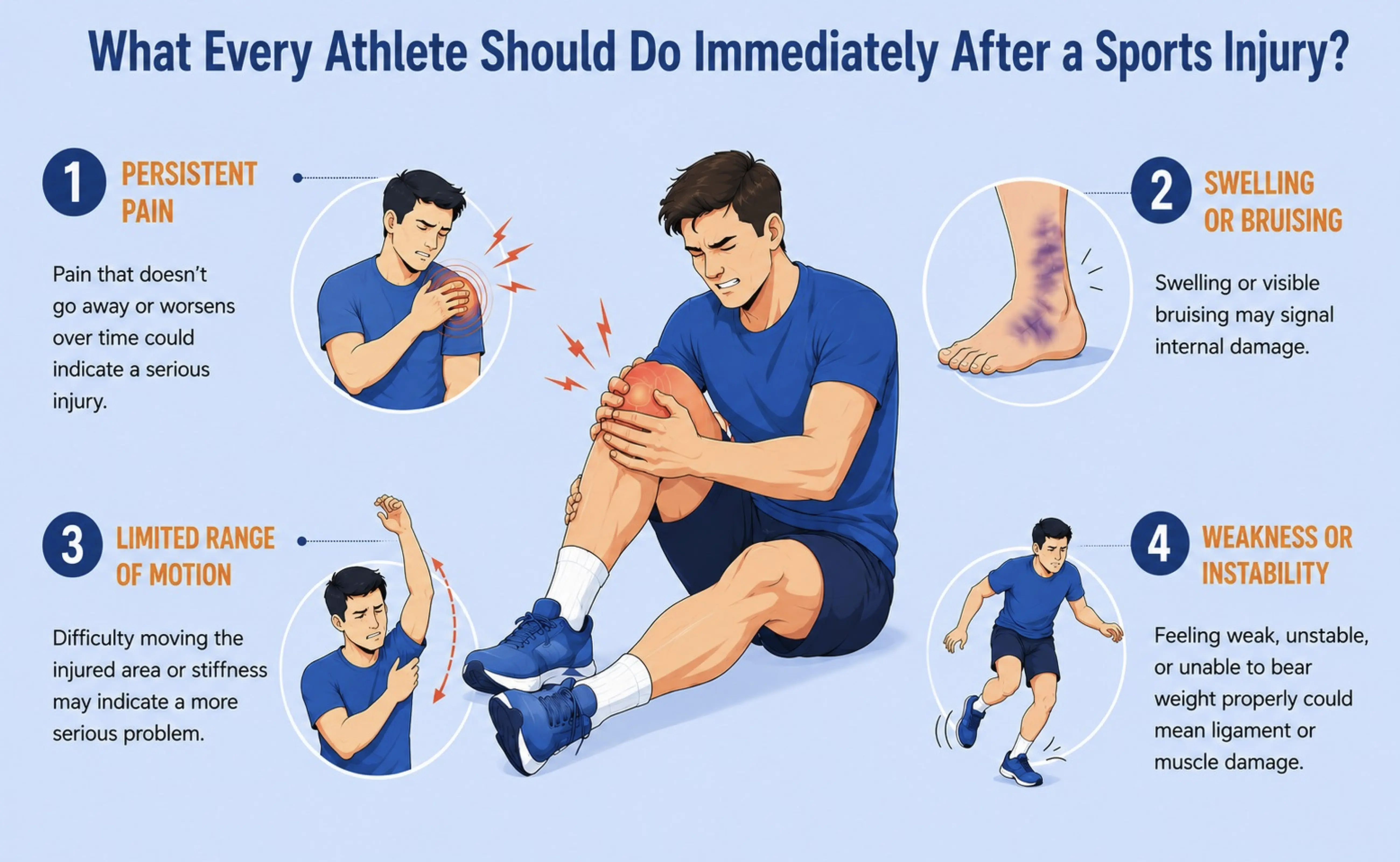
Early recognition of a sports injury can help prevent further damage and support timely treatment. Here are some common signs athletes should watch for:
1. Persistent Pain
Pain that continues during or after physical activity is one of the most common signs of a sports injury. While mild soreness may occur after exercise, sharp, worsening, or recurring pain often indicates damage to muscles, ligaments, tendons, or joints that should not be ignored.
2. Swelling or Bruising
Swelling and bruising are common responses to tissue damage. They may develop immediately after an injury or appear several hours later. Visible swelling, discoloration, or tenderness around a specific area can indicate that the body is responding to an underlying injury.
3. Limited Range of Motion
Difficulty bending, extending, rotating, or moving a body part normally may signal a sports injury. Restricted movement can result from pain, swelling, muscle strain, or joint damage and may interfere with an athlete's ability to perform regular activities.
4. Weakness or Instability
A feeling that a joint cannot properly support weight or that a muscle has suddenly become weaker can indicate structural damage. Instability in the knee, ankle, shoulder, or other joints should be evaluated, particularly if it affects balance or movement.
Immediate Steps Athletes Should Take After an Injury
Acting quickly after a sports injury can help limit further damage and support recovery. Here are some important first-aid steps athletes should take:
- Stop the activity immediately and avoid placing additional stress on the injured area.
- Protect the affected body part from further impact, movement, or strain.
- Elevate the injured limb above heart level when possible to help manage swelling.
- Apply a compression bandage to provide support and reduce fluid buildup.
- Monitor symptoms such as severe pain, swelling, instability, or loss of movement.
- Seek professional medical evaluation if symptoms worsen or do not improve.
Sports ligament injuries often occur due to sudden movements, joint stress, and physical demands during athletic activities.
Common Mistakes to Avoid After a Sports Injury
Many sports injuries can become worse when the wrong steps are taken immediately after an injury. Here are some common mistakes to avoid for a safer recovery:
- Continuing to play despite pain, swelling, or reduced mobility after an injury.
- Returning to training too soon before the injured area has adequately recovered.
- Ignoring persistent symptoms such as instability, weakness, or a limited range of motion.
- Self-diagnosing the injury without seeking professional advice when symptoms worsen.
- Using anti-inflammatory medications unnecessarily during the early stages of healing.
- Failing to protect or support the injured area during daily activities and movement.
Why Rest and Early Care Are Important After a Sports Injury
Taking the right steps soon after a sports injury can make recovery smoother and help reduce the risk of setbacks. Rest and early care are often key parts of the healing process.
1. Helps Control Swelling and Pain
Early injury management can help limit excessive swelling and discomfort around the affected area. Keeping these symptoms under control may improve mobility and make the recovery process more manageable.
2. Supports Better Tissue Recovery
Injured muscles, ligaments, tendons, and joints require time to repair. Adequate rest reduces unnecessary stress on damaged tissues and allows the body to focus on healing rather than responding to repeated strain.
3. Reduces the Risk of Reinjury
Returning to sport too quickly can place athletes at risk of aggravating an existing injury. Proper recovery time helps restore strength, stability, and function before normal activity resumes.
4. Improves Long-Term Performance
Addressing an injury early can help prevent lingering issues that affect movement, training consistency, and athletic performance. A complete recovery often supports a safer and more sustainable return to sport.
When Should You See a Doctor for a Sports Injury?
If you experience severe pain, swelling, joint instability, difficulty bearing weight, limited movement, or if your condition does not improve within a few days, see a doctor. Symptoms like a popping sensation, visible deformity, or a sudden loss of strength may indicate a more serious injury. Seeking early evaluation can help ensure you receive the right treatment and reduce the risk of long-term complications.
Final Word
Knowing what to do immediately after a sports injury can play an important role in recovery and long-term athletic performance. Recognizing early warning signs, avoiding common mistakes, prioritizing rest, and seeking timely medical care can help athletes minimize complications and return to activity more safely. The decisions made in the hours and days following an injury often have a significant impact on the overall recovery process.
If symptoms persist, worsen, or begin to affect your ability to train and compete, it may be time to consult a sports medicine specialist. Dr. Kunal Patel provides comprehensive sports injury treatment to help athletes identify the cause of their injury, receive appropriate care, and return to sport with confidence.
FAQ’s
1. What should I do immediately after a sports injury?
Stop the activity, protect the injured area, and begin appropriate first-aid measures.
2. How do I know if a sports injury is serious?
Persistent pain, swelling, instability, or difficulty bearing weight may indicate a more serious injury.
3. Should I apply ice immediately after a sports injury?
Yes, applying ice for 15–20 minutes at a time during the first 24–48 hours may help reduce pain and swelling in many acute sports injuries.
4. What is the PEACE protocol for sports injuries?
PEACE stands for Protect, Elevate, Avoid anti-inflammatory medications, Compress, and Educate.
5. How long should I rest after a sports injury?
Recovery time varies based on the injury, but athletes should return to sport only after assessment by a sports injury specialist and restoration of normal function.
6. When should I see a sports injury specialist?
If symptoms persist or limit movement, consulting Dr. Kunal Patel can help determine the most appropriate treatment plan.
7. Can a minor sports injury become worse over time?
Yes, untreated injuries can develop into chronic pain or recurring problems.
8. What are the most common signs of a sports injury?
Pain, swelling, bruising, weakness, and reduced range of motion are common indicators.
9. Why is early treatment important after a sports injury?
Early care can help prevent complications and support a more effective recovery.
10. Can I return to sports as soon as the pain goes away?
No, athletes should ensure proper healing and restored function before returning to activity.