
MENU
Treatment Options for AVN: Surgery vs Other Methods
Author : Dr. Kunal Patel (MBBS, MS (Ortho),Mch, FIJR, FIAS, (HSS-USA and Endoklinic Germany)
Category : Hip
Published Date : April 27, 2026
Table of Contents
The initial reaction to an AVN diagnosis can be confusing. Naturally, one will wonder what it is and how it can be controlled. The good news is that modern medicine now offers several safe and effective ways to treat and manage AVNs.
Not all cases necessitate urgent surgery. In most cases, the condition can be managed effectively through a combination of monitoring, non-surgical care, or minimally invasive procedures.
This blog will discuss AVN in easy language and take you through the treatment options available to you so that you can feel informed and encouraged.
What is an AVN?
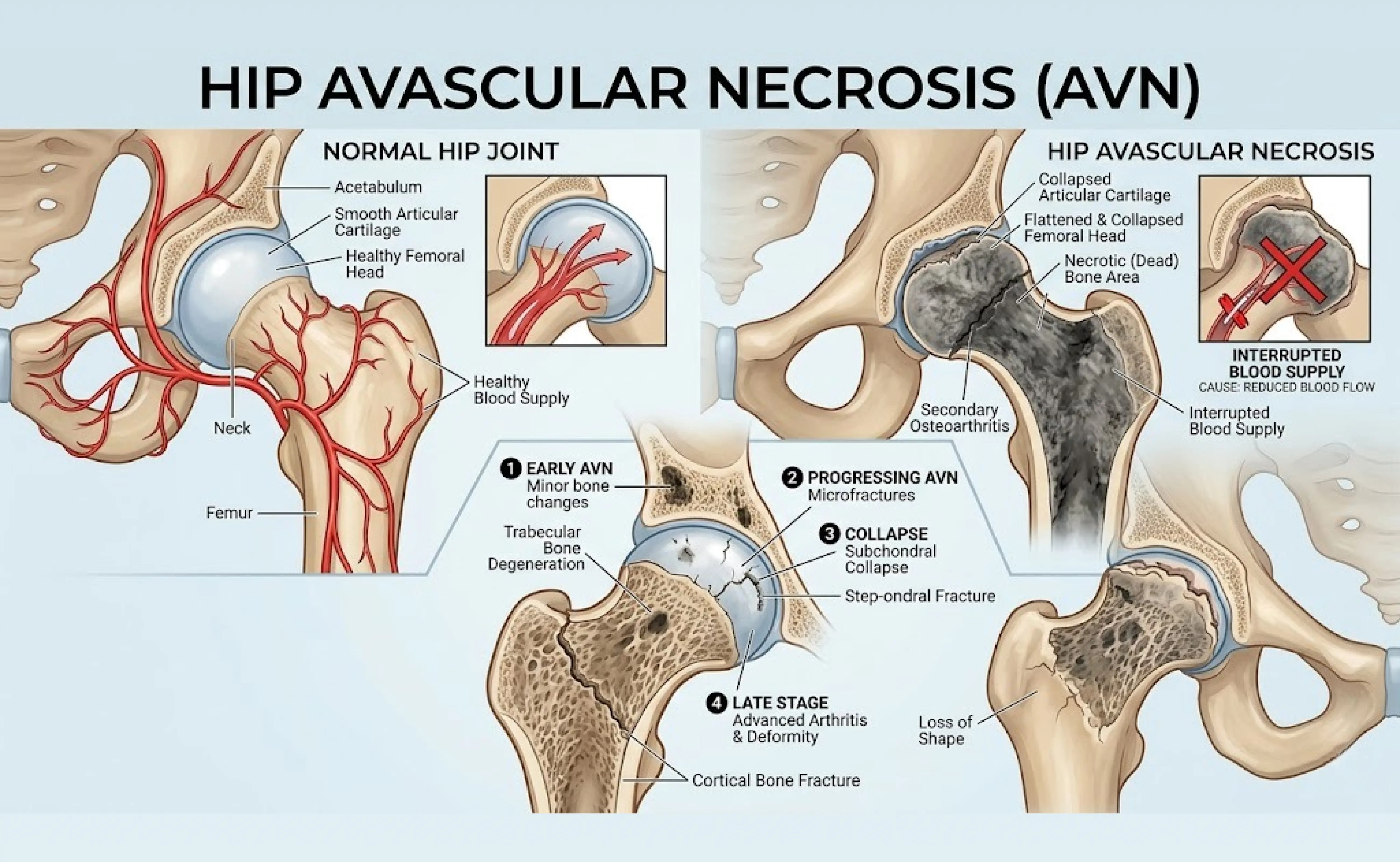
AVN is an abbreviation that means Avascular Necrosis. It is a disorder in which the bones lose blood supply in an abnormal manner, causing the bone tissue to weaken and gradually break down. This influences the free circulation of blood in that region.
AVN most commonly affects the hip joint, but it can also involve the knee, shoulder, or other joints. Avascular Necrosis (AVN) mostly affects adults between 30 and 50 years of age. This rise is commonly associated with steroid overuse, excessive alcohol use, and post-COVID-19 complications. Approximately 73.9 percent of the cases are observed in men.
Other individuals might not have symptoms over a long period of time, and others might have symptoms based on the size and location of the AVN. Many AVNs can be treated with appropriate medical advice
Stages of AVN and Their Impact on Treatment
Avascular Necrosis (AVNs), especially brain ones, are uncommon and exist at birth and are found in less than 1 percent of people in India, according to PubMed Central. Their symptoms usually include joint pain (especially in the hip or groin), stiffness, and difficulty in movement. The condition may gradually worsen over time if not managed properly, and the mortality rate is about 10-15 percent.
AVNs can vary in size, structure, and behavior. The stage or the severity is normally identified by the physicians in order to identify the most suitable mode of treatment.
· Early Stage (Small AVNs): There may be no noticeable symptoms, but changes can be detected through imaging tests.
· Moderate Stage: At this stage, pain and discomfort begin as the bone starts weakening, and doctors may suggest active treatment.
· Advanced Stage: The bone may collapse, leading to joint damage and reduced mobility.
Being aware of the stage will help the doctors make a choice of a treatment plan that is safe and suitable for the individual. That is why it is possible to make a great difference when using the services of specialists who can provide the most effective hip treatment in Chennai.
Non-Surgical Treatment Options for AVN
Not every AVN requires surgery. Non-surgical techniques can be used to control symptoms and enhance quality of life in most situations.
Medications and Pain Management
Medications may be recommended to manage symptoms such as discomfort or headaches.
These medicines help:
· Improve comfort
· Support daily functioning
· Reduce symptom-related stress
They do not reverse AVN but help slow progression and improve comfort, which is why seeking the avascular necrosis treatment in Chennai can help you access comprehensive care options.
Style Changes & Physiotherapy
Simple lifestyle adjustments can make a meaningful difference.
These may include:
· Avoiding tasks that put pressure on the body.
· Practicing gentle exercises
· Following physiotherapy routines
Physiotherapy helps:
· Improve strength
· Enhance mobility
· Support overall well-being
Weight Management & Activity Modification
A healthy weight helps the body to be less pressurized and helps the body to circulate better.
Doctors may suggest:
· Balanced nutrition
· Moderate physical activity
· Avoiding high-risk movements
These changes help reduce unnecessary stress on affected areas, and for those exploring advanced care options, medical tourism for orthopedics in India offers access to specialized treatment and expert guidance
Regenerative Therapies (Stem Cells, PRP)
In other instances, we can speak about such high-tech treatments as Platelet-Rich Plasma (PRP) or regenerative methods.
These aim to:
· Support tissue healing
· Improve recovery
· Enhance overall function
These treatments are typically taken into consideration according to personal requirements and medical consultation.
Surgical Treatment Options for AVN
Surgical or minimally invasive interventions can also be applied in treating AVN in certain instances when necessary.
Microsurgical Removal
This includes the removal of the AVN using a well-planned surgery.
It is usually recommended when:
· The AVN is available.
· The advantages of elimination are evident.
One of the benefits is that the AVN is excised immediately. In some cases, surgical or minimally invasive procedures may be useful in treating AVN when needed.
Core Decompression
In the early stages of avascular necrosis, core decompression is a minimally invasive procedure. It includes the removal of a small part of the inner bone to alleviate pressure, promote blood flow, and stimulate natural healing. This treatment helps relieve pain and may slow down the progression of the condition, potentially delaying or avoiding the need for more extensive surgeries like joint replacement.
Joint Replacement Surgery
Joint replacement surgery is usually recommended in advanced stages of avascular necrosis, especially when the hip joint is severely damaged. In this process, the damaged joint is substituted with a man-made implant to regain mobility and alleviate pain. It is considered a reliable and long-term solution for improving mobility, enhancing daily function, and helping patients return to a more active and comfortable lifestyle.
Which Treatment is Best for You?
There is no one-size-fits-all treatment for AVN.
Physicians take into account a number of factors:
· AVN size and location.
· Symptoms
· Age and general health.
· Possible advantages and dangers.
An individualized methodology makes the treatment safe, effective, and individualized.
When Do Doctors Recommend Monitoring Instead of Treatment?
In some situations, doctors may recommend routine monitoring instead of immediate treatment (for early-stage AVN).
This is normally suggested when:
· The AVN is small
· No major symptoms.
· The benefits are less than the risks of the treatment.
Monitoring includes:
· Regular check-ups
· Imaging tests
· Ongoing observation
This will assist in ensuring that the treatment is started when it is needed.
Conclusion
Avascular Necrosis (AVN) may sound complex, but with the right understanding and medical support, it can be managed effectively.
Among non-surgical treatments such as medication and lifestyle care, there are also more complicated procedures such as core decompression and joint replacement.
The trick lies in early assessment, individual care, and follow-up. With the right care, individuals with AVN can continue to lead a balanced and active life. Contact us right now to book your appointment.
FAQ’s
1. Does every AVN require surgery?
No, many AVNs can be managed with non-surgical methods or monitoring, depending on the situation.
2. Are non-surgical treatments effective?
Yes, non-surgical options help manage symptoms and support overall health, especially in less severe cases.
3. Is AVN treatment safe?
Modern treatment approaches are carefully planned and performed by specialists, making them safe and effective in most cases.
4. Can AVN be completely treated?
In some cases, AVN can be treated effectively with the right approach. The outcome depends on individual factors.
5. When should I consult a doctor?
If you experience symptoms or have been diagnosed with AVN, consulting a specialist helps you understand the best next steps.