
MENU
Stages of AVN and Treatment Options at Each Stage
Author : Dr. Kunal Patel (MBBS, MS (Ortho),Mch, FIJR, FIAS, (HSS-USA and Endoklinic Germany)
Category : Hip
Published Date : May 21, 2026
Table of Contents
Avascular Necrosis (AVN) is a condition in which the bone health is compromised because there is not enough blood to a certain portion of the bone. It typically involves the hip joint and can slowly affect movement and comfort over time if it is not treated early.
The positive side is that, if AVN is diagnosed early, proper care and treatment strategy can help many people keep the condition under control to ensure active living.
In this blog, we will learn about AVN in simple and easy-to-understand terms, its stages, common symptoms, and its treatment for each stage.
Why Does AVN Happen?
AVN occurs when the blood supply to a bone is interrupted for a certain amount of time. Poor blood flow can cause a gradual change in bone structure because bones require adequate blood flow to maintain strength.
In India, the cases of AVN had risen drastically following the COVID-19 pandemic and were estimated to have affected over 5 lakh people. Today, as per a report by PubMed Central, AVN accounts for almost 51.8% of hip replacement surgeries in India, while approximately 6% of such surgeries in the United States are performed by AVN. There are several reasons why AVN can be caused:
· History of previous trauma/injury
· Long-term steroid use
· Excess alcohol consumption
· Some circulatory disorders, like heart disease and diabetes
· Chronic overuse of the joint(s)
Many people have information they are searching for about hip AVN treatment and recovery, and the hip joint is one of the most common areas of concern.
Common Symptoms of AVN
Symptoms of AVN may not be noticeable in the early stages. The symptoms may get worse as the disease advances. Here are some common AVN symptoms in the hip:
· Hip Discomfort: One of the initial symptoms can be a mild discomfort in the hip or groin area.
· Stiffness in Movement: Others experience stiffness when walking, bending, or rising out of a sitting position.
· Pain During Activity: Climbing the stairs or walking for extended periods of time can be uncomfortable.
· Reduced Mobility: Over time, the hip joint may become less flexible.
· Limping While Walking: Some people might experience changes in their walk as they continue to progress through AVN.
Early recognition of these signs will help to ensure timely care and better management, especially when guided by experts at the best knee replacement centre in Chennai for accurate diagnosis and personalised treatment.
How Doctors Diagnose AVN
Every year, around 16,000 people in India are diagnosed with avascular necrosis (AVN), and many of them may eventually need total hip replacement surgery as the condition progresses over time.
Early AVN diagnosis is crucial because treatment is best when applied in the early stages. AVN is typically diagnosed by:
Physical Examination
The doctor checks:
· Joint movement
· Flexibility
· Areas of discomfort
Imaging Tests
· X-rays: Useful when considering later changes in bone structure.
· MRI Scan: MRI is one of the most powerful methods for detecting AVN early, before significant bone changes are evident.
Medical History
Your doctor might also talk about:
· Previous injuries
· Medication history
· Lifestyle habits
This helps to develop a customised treatment plan, ensuring patients receive expert care from the best knee replacement surgeon in Chennai for long-term pain relief and improved mobility.
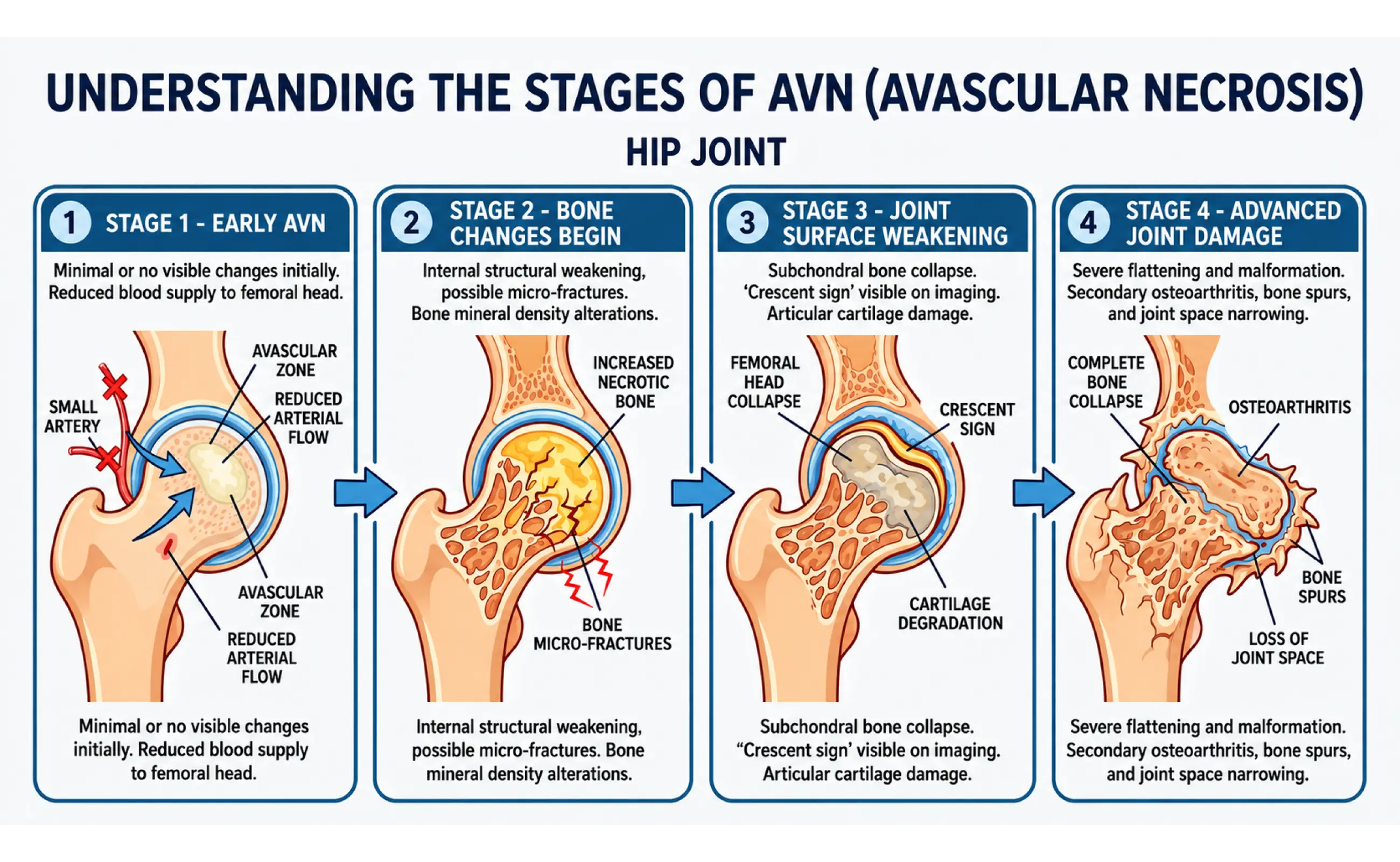
Understanding the Stages of AVN
The stages of AVN give doctors an idea of how damaged the bone and joint are. Treatment may vary based on stage.
Stage 1 - Early AVN
At this stage:
· Symptoms can be mild.
· An X-ray might look normal.
· Early changes may be detected by MRI.
Common Symptoms
· Mild hip discomfort
· Occasional stiffness
Treatment Options
· Activity modification
· Physiotherapy
· Medications for comfort
· Weight management
Treatment at this early stage can be very effective in the control of AVN.
Stage 2 - Bone Changes Begin
Early changes in the bone structure occur.
Symptoms
· More rest needed after activity
· Reduced flexibility
Treatment Options
· Physiotherapy
· Lowered stress on the joint.
This is an important stage because timely treatment at this stage can help maintain the health of the joints, particularly if the patient receives advanced treatment and assistance in India through orthopaedic medical tourism for foreign nationals who wish to seek treatment from the expert medical team and experts who can provide them with assistance during recovery.
Stage 3 - Joint Surface Weakening
In stage 3, the joints become weaker. Bones can now start to weaken at the surface.
Symptoms
· Dysfunction when doing daily activities
· Trouble walking for extended periods of time.
· Limping
Treatment Options
· Advanced joint-preserving procedures
· Assisted mobility support (as required)
· Specific approaches to hip AVN treatment in the hip are being attempted.
Stage 4 - Advanced Joint Damage
The advanced stage of joint damage is also referred to as stage 4, or advanced joint damage. This is the higher level of AVN.
Symptoms
· Persistent discomfort
· Significant stiffness
· Limited mobility
Treatment Options
· Joint replacement surgeries can be considered
|
Stage of AVN |
Common Symptoms |
Treatment Options |
|
Stage 1 |
Mild discomfort, stiffness |
Physiotherapy, medications, lifestyle changes |
|
Stage 2 |
Increased pain during activity |
Core decompression, joint preservation methods |
|
Stage 3 |
Limping, reduced mobility |
Advanced procedures, mobility support |
|
Stage 4 |
Persistent stiffness and movement difficulty |
Joint replacement and rehabilitation |
Can AVN Be Managed Without Surgery?
Yes, there are some early cases where AVN can be treated without surgery. Non-surgical treatment options might involve:
· Physiotherapy: Helps improve joint movement, reduce pain, and strengthen the muscles around the affected area.
· Weight management: Maintaining a healthy weight reduces pressure on the joints and helps slow further damage.
· Activity modification: Avoiding high-impact activities and adjusting daily movements can help prevent worsening symptoms.
· Medications for symptom management: Medicines may help control pain, swelling, and discomfort to improve daily functioning.
The goal is to:
· Reduce joint stress
· Improve mobility
· Slow AVN progression
However, depending on the stage and condition of the joint, treatment is possible.
When Should You Consult an Orthopedic Specialist?
You should seek advice from a specialist if you see:
· Persistent hip discomfort
· Stiffness during movement
· Difficulty walking comfortably
· Hip joint flexibility is decreased.
AVN diagnosis occurs early when there is timely consultation, and supports better outcomes in the longer term.
Conclusion
Knowing what to look for at each stage of AVN can help individuals to identify AVN symptoms in hip early and receive appropriate treatment at the appropriate time.
There are several options available for modern orthopedic care, from lifestyle changes to physiotherapy and advanced treatments for hip AVN. Early attention, regular follow-up, and an individualised treatment plan are the keys.
Many individuals with AVN can live an active and comfortable life with proper care and guidance. Contact our expert doctors to start your AVN treatment now.
FAQ’s
1. What is AVN?
Avascular Necrosis (AVN), also known as AVN of the hip, is a condition where the blood supply to the bone is decreased.
2. What are the common AVN symptoms in the hip?
The symptoms that are common are hip pain, stiffness, decreased range of motion, and difficulty with movement.
3. Can AVN be diagnosed early?
Yes, MRI can be used to diagnose AVN earlier than significant changes occur on X-rays.
4. Is surgery always needed for AVN?
No, there are some treatment options that are not surgical, which can often be used to treat early AVN.
5. What is the best treatment for hip AVN?
Determining the best hip AVN treatment will rely on the symptoms and the health of the joint itself.
6. Can physiotherapy help in AVN?
Yes, physiotherapy can help to increase mobility, build muscles, and decrease stress on the joint.
7. How does AVN progression happen?
AVN progression occurs over time, with the bone structure being affected by the reduced supply of blood.
8. Is walking safe with AVN?
Moderate activity may be recommended in some cases, but it is important to follow medical guidance based on the stage.
9. Which joint is most frequently affected by avascular necrosis (AVN)?
One of the most commonly affected locations of AVN is the hip.
10. When should I consult a doctor for AVN symptoms?
If persistent hip pain, stiffness, or limited motion occurs, it's best to seek advice from a specialist.