
MENU
Meniscus vs Ligament Injury: What’s the Difference?
Author : Dr. Kunal Patel (MBBS, MS (Ortho),Mch, FIJR, FIAS, (HSS-USA and Endoklinic Germany)
Category : Knee
Published Date : April 28, 2026
Table of Contents
Knee injuries are quite common, especially among people who stay active through sports, fitness routines, or even daily physical work. The most popular ones are the meniscus injury and the ligament injury.
Both affect the knee, but they are different in how they occur, where they occur and how they are treated.
The positive aspect is that both conditions can be managed successfully with the proper knowledge and appropriate intervention. This blog will simplify the differences in a straightforward and clear manner to enable you to remain aware and assured.
Meniscus vs Ligament Injury
This is one of the fundamental differences that can make you realise why symptoms and treatment may not be the same between the two.
|
Feature |
Meniscus Injury |
Ligament Injury |
|
Tissue affected |
Cartilage |
Ligament |
|
Function |
Shock absorption |
Joint stability |
|
Common cause |
Twisting or squatting |
Sudden stop, pivot, or impact |
What Is a Meniscus Injury?
The meniscus is a cartilage shaped like a C in the knee, which serves to cushion the thigh bone and the shin bone.
Meniscus tear is a common tear that occurs when the knee is abruptly turned or rotated, especially when the foot is fixed directly on the ground.
As a report of PubMed Central indicates, approximately 68 percent to 78 percent of athletes who sustain knee injuries and are active are diagnosed with some form of meniscal injury, and this fact has made it one of the most prevalent problems of the knee in sports.
This kind of injury is prevalent in:
· Sports activities
· Sudden movements
· Deep squatting
The injury to the meniscus may be mild or more severe, based on the motion and the force of the movement. In case you have constant knee pain or instability, it may be a good idea to see the best knee hospital in Chennai and get a proper diagnosis and the appropriate treatment plan early.
Why Is the Meniscus Important?
The meniscus is significant in keeping the knee healthy.
A study carried out by the Asian Journal of Orthopaedic Research revealed that the average age was approximately 48.5 years, and the majority of the people were aged between 51 and 73 years.
Its main functions are:
· Shock absorption
· It lessens the effects on the knee during walking, running and jumping.
· Joint stability
· It helps to keep the knee in balance during motion.
· Smooth movement
It allows the movement of the bones freely without friction.
With the involvement of the meniscus, these functions can be somewhat disrupted, and that is why it is necessary to take good care of them. Ligament rupture, such as in ACL tears, can be treated in a timely manner with high-tech surgeries such as ACL reconstruction, which can restore normal knee stability and functionality.
7 Common Symptoms of a Meniscus Tear
Recognizing early signs can help you take timely steps toward recovery.
1. Knee Discomfort
You can experience a slight to moderate pain in your knee, particularly during walking, bending, or stair climbing. It often begins as a slight uneasiness and may become more noticeable with activity. This pain is normally how the body is trying to tell it that the knee requires rest and attention. Early attention can be helpful to control the condition and assist in a more successful recovery.
2. Swelling Around the Knee
The swelling can occur gradually over a few hours or a day following the injury. The knee may appear a bit puffy or tight. It is a natural reaction of the body that defends the damaged area. Keeping the leg elevated and allowing time for rest can help reduce swelling and improve comfort over time.
3. Stiffness
The knee might be stiff and might not move easily. You might notice this more after sitting for long periods or when trying to bend or straighten your leg. Stiffness can limit daily activities slightly, but with gentle movement and guided care, flexibility usually improves gradually.
4. Locking Sensation
In some cases, the knee can give the impression that it is becoming trapped or not moving easily. This is often described as a locking sensation. It may occur when a section of the meniscus gets in the way of normal joint movement. Although this might be awkward, with the correct medical advice and treatment, the smoothness in movement can be restored with time.
5. Clicking Sound
When you move your knee, you may hear a clicking or popping noise. This may occur in bending and straightening or walking. It is usually caused by changes in how the joint surfaces move due to the meniscus injury. While it may not always be uncomfortable, it is a sign that the knee may need attention and care.
6. Difficulty in Straightening the Knee
It might be a bit difficult to straighten your leg completely. The knee may be tight or short of its usual location. It can influence such simple tasks as standing or walking comfortably. This movement can be enhanced with time under appropriate care and practice.
7. Reduced Flexibility
Squatting, sitting cross-legged, or bending the knee to a deep position may be restricted. The joint might not move as comfortably and easily as it used to. This reduced flexibility can impact daily activities, but with gradual strengthening and physiotherapy, most people notice steady improvement in their range of motion.
What Is a Ligament Injury?
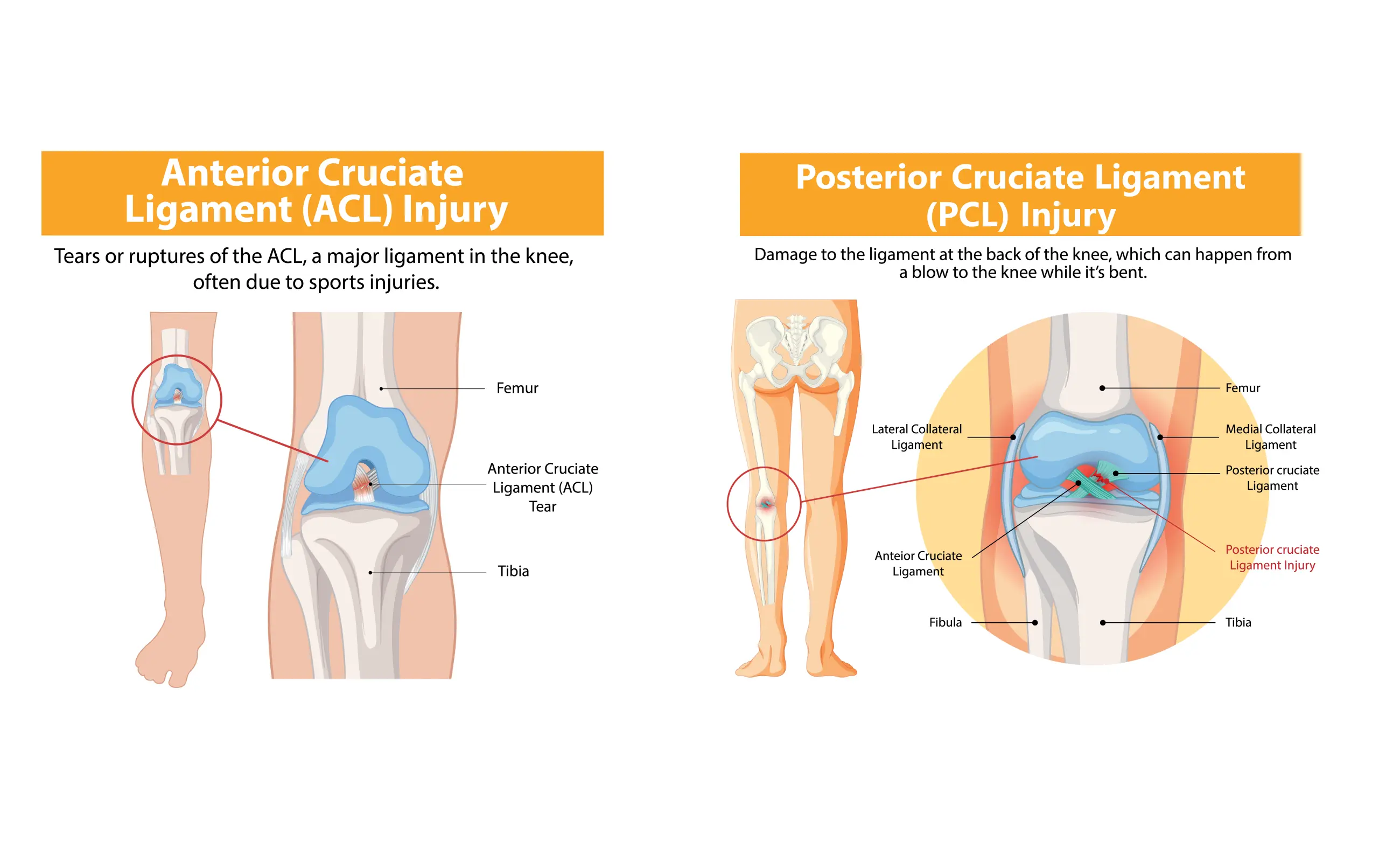
Ligaments are strong bands of tissue that connect bones and help stabilise joints.
Key ligaments in the knee are:
· ACL (Anterior Cruciate Ligament)
· PCL (Posterior Cruciate Ligament)
Ligament injury takes place when these tissues are strained or stretched due to abrupt movements.
Common Causes:
· Stopping or turning around.
· Twisting the knee
· Direct blow in sports
Injuries to the ligaments are often observed in such sports as football, basketball, and cricket. Such procedures as meniscal repair become important in these situations to maintain the knee functionality, decrease pain, and enable people to resume sports and everyday activities safely.
Types of Knee Ligament Injuries
|
Ligament |
Location |
Common Cause |
|
ACL (Anterior Cruciate Ligament) |
Center of the knee |
Pivot or sudden stop in sports. |
|
PCL (Posterior Cruciate Ligament) |
Back of the knee |
Direct impact or fall. |
ACL (Anterior Cruciate Ligament)
The ACL is situated in the middle of the knee and is critical in ensuring stability during movements. It assists in maintaining the anterior movement of the shin bone and avoids over-rotation.
ACL injuries are commonly seen in sports that involve sudden stopping, pivoting, or jumping, such as football, basketball, and badminton. A sudden shift in the direction or a clumsy landing may cause pressure on the ligament.
Individuals who have sustained an ACL injury might experience instability in the knee, particularly during walking or turning. Recovery is highly possible with proper care, physiotherapy, and in certain instances, guided processes.
PCL (Posterior Cruciate Ligament)
The PCL is located at the back of the knee and supports the joint by preventing the shin bone from moving too far backward. It plays an important role in maintaining overall knee balance.
PCL injuries are typically caused by direct force, like falling on a bent knee or sudden collision. These injuries are not as prevalent as ACL injuries, but they also need to be addressed properly.
The symptoms might encompass slight pain, edema, or even a sense of weakness at the knee. Non-surgical interventions such as rest and physiotherapy are sufficient to treat many PCL injuries based on their severity.
All the ligaments have a part to play in ensuring the knee is stable when it is in motion.
Treatment Options for Meniscus and Ligament Injuries
The therapy method is based on the level of injury, activity and general health.
1. Rest and Basic Care
In many mild cases:
· Resting the knee
· Applying ice
· Avoiding strain
It will assist the body in its natural healing.
2. Physiotherapy
Physiotherapy is important in the recovery process.
It helps:
· Improve strength
· Restore flexibility
· Support joint stability
3. Medications
Doctors may suggest medications to manage discomfort and support recovery.
4. Minimally Invasive Procedures
In other instances, surgical operations such as arthroscopy can be prescribed to treat or correct the damage.
5. Surgical Treatment
In case of more serious injuries:
· Meniscus repair or trimming.
· Ligament reconstruction (as in ACL surgery) may be advised.
It always depends on the personal needs and medical assessment.
When Should You Consult a Doctor?
You should always consult a doctor in case you have noticed:
· Persistent discomfort
· Swelling without improvement.
· Difficulty in movement
· A feeling of instability
Recovery can become easier and more successful through early attention.
Conclusion
Meniscus and ligament injuries may sound similar, but they affect different parts of the knee and have different roles.
The ligaments make it stable, and the meniscus serves as a cushion. Understanding this difference helps in recognising symptoms and choosing the right care.
The good news is that both conditions can be controlled with the help of timely attention, appropriate guidance, and the appropriate treatment approach.
Being mindful and listening to your body can enable you to proceed with your daily activities without hesitation. Book your appointment today.
FAQ’s
1. What is the main difference between meniscus and ligament injury?
A meniscus injury affects cartilage, while a ligament injury affects the tissues that stabilise the joint.
2. Which injury is more common?
Both are common, especially among active individuals and sports players.
3. Can these injuries heal without surgery?
Yes, many mild cases improve with rest, physiotherapy, and proper care.
4. How do I know which injury I have?
A medical evaluation, including examination and imaging if needed, helps identify the exact issue.
5. How can I prevent knee injuries?
- Warm up before the activity
- Strengthen leg muscles
- Avoid sudden movements
- Maintain proper posture