
MENU
Best Sitting Position for Long Working Hours
Author : Dr. Kunal Patel (MBBS, MS (Ortho),Mch, FIJR, FIAS, (HSS-USA and Endoklinic Germany)
Category : Orthopedics
Published Date : July 22, 2026
Table of Contents
Spending hours in the same chair may seem harmless, but your body often feels the effects before you notice them. A stiff neck after work, frequent back discomfort, or tired shoulders can sometimes be linked to the way you sit every day.
Maintaining the best sitting position for long working hours is not about forcing your body to stay perfectly straight; it is about keeping your spine supported and reducing unnecessary pressure on your muscles and joints.
Making small improvements to your posture and workstation setup can help you stay more comfortable during extended sitting hours.
What Is the Correct Sitting Position?
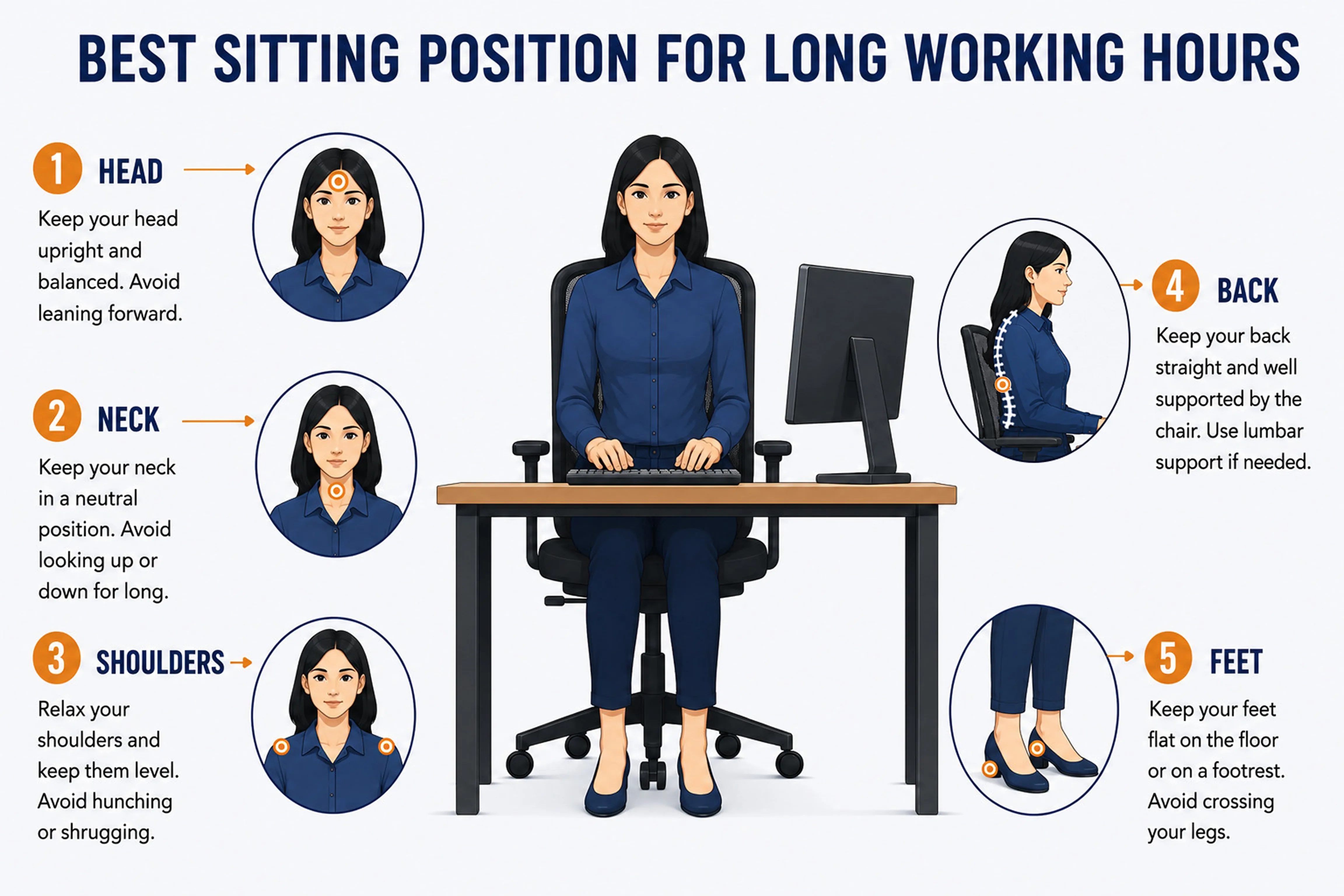
The correct sitting position keeps your body naturally aligned and reduces extra pressure on your spine, muscles, and joints. Here is how each body part should be positioned while sitting for long hours:
|
Body Part |
Correct Position |
|
Head |
Keep your head aligned with your spine and avoid leaning forward toward the screen |
|
Neck |
Keep your neck straight and relaxed without bending it for long periods |
|
Shoulders |
Keep your shoulders relaxed and avoid raising or rounding them forward |
|
Back |
Keep your back supported with the natural curve of your spine maintained |
|
Feet |
Place your feet flat on the floor to maintain proper balance and support |
Why Your Sitting Position Matters
Your sitting position matters because it directly affects your spine alignment, muscle balance, and comfort during long working hours. Sitting incorrectly for extended periods can increase pressure on your back and contribute to neck, shoulder, or joint discomfort. Correct posture and an ergonomic workspace help reduce unnecessary strain while improving daily comfort.
According to a report published by The Times of India, doctors have observed nearly a 40% rise in spinal stress cases linked to poor posture habits and increased screen time.
Common Sitting Mistakes to Avoid
Small posture mistakes repeated every day can increase strain on your spine, muscles, and joints. Here are some common sitting habits to avoid:
- Keep your back fully supported against the chair.
- Keep your head aligned with your spine while looking at a screen.
- Keep your shoulders relaxed.
- Keep your feet flat on the floor instead of crossing your legs.
- Change your position and take short movement breaks every 15–20 minutes.
Beyond posture-related discomfort, sitting for long hours can also affect overall joint health. A combination of obesity and prolonged sitting habits may increase the risk of early knee arthritis.
Simple Tips to Improve Your Sitting Position
- Set your chair at a height where your feet remain flat and well-supported on the floor
- Position your monitor correctly to prevent your neck from leaning forward for long periods
- Use proper back support to maintain the natural curve of your spine
- Keep your shoulders relaxed and avoid staying stiff while working
- Change your sitting position regularly and include short movement breaks
How Often Should You Take Breaks?
You should take a short break every 15 to 20 minutes when sitting for long working hours. Staying in the same position for too long can reduce muscle activity, increase stiffness, and place continuous pressure on your spine and joints.
According to a review published on PubMed, ergonomic interventions like posture guidance and workplace adjustments can help reduce musculoskeletal discomfort among people with sitting jobs. Regular movement breaks help maintain flexibility and prevent strain.
If you continue to experience frequent pain or posture-related problems despite making these changes, consulting a knee specialist in Chennai can help identify the cause and guide you with the right care.
When Should You See a Doctor?
If you have ongoing posture-related pain, consult the best orthopedic doctor in Chennai for expert guidance and treatment.
- Back, neck, or shoulder pain continues even after improving your sitting posture
- You notice unusual sensations, reduced strength, or discomfort spreading to your arms or legs
- Discomfort starts interfering with your routine activities, rest, or workplace productivity
- Your stiffness or discomfort keeps returning frequently
- You find it difficult to sit comfortably, even for short periods
- Pain increases gradually instead of improving with rest and movement
Conclusion
Maintaining the right sitting position during long working hours can make a significant difference in protecting your spine, muscles, and overall posture. Simple changes such as supporting your back, keeping your screen at the right height, and taking regular movement breaks can help reduce unnecessary strain and improve daily comfort.
If you continue to experience back pain, stiffness, or posture-related discomfort despite making these changes, consult Dr. Kunal Patel to understand the underlying cause and receive personalized treatment recommendations for better movement and long-term joint health.
FAQs
1. What is the best sitting position for long working hours?
The best sitting position keeps your back supported, shoulders relaxed, feet flat, and your spine naturally aligned.
2. Can sitting incorrectly cause back pain?
Yes, poor sitting posture can increase pressure on your spine and contribute to back pain or stiffness.
3. How should I position my computer screen while working?
Keep your screen at eye level to avoid constantly bending your neck forward.
4. Is sitting straight all day good for your posture?
No, maintaining support and changing positions regularly is better than sitting all day rigidly.
5. How often should office workers take breaks from sitting?
Taking short movement breaks every 30 to 60 minutes can help reduce stiffness and muscle strain.
6. Can a chair affect your sitting posture?
Yes, a chair with proper height and back support can help maintain a healthier sitting position.
7. Why do my shoulders hurt after sitting for long hours?
Shoulder pain can happen due to poor posture, muscle tension, or improper desk setup.
8. Can posture problems be corrected?
Yes, many posture problems can improve with proper guidance, exercises, and lifestyle changes.
9. When should I worry about pain caused by sitting?
Look for medical advice if pain is frequent, worsening, or affecting your everyday activities.
10. Which doctor should I consult for posture-related pain in Chennai?
You can consult Dr. Kunal Patel for posture-related pain, diagnosis, and treatment guidance.