
MENU
10 Foods Should You Avoid for Better Joint Health
Author : Dr. Kunal Patel (MBBS, MS (Ortho),Mch, FIJR, FIAS, (HSS-USA and Endoklinic Germany)
Category : Orthopedics
Published Date : June 29, 2026
Table of Contents
Many people pay close attention to what they eat for their heart, weight, or overall health, but few consider how their diet may affect their joints. While occasional aches and stiffness can happen for a variety of reasons, the foods you eat regularly may play a role in how comfortable and mobile your joints feel over time.
Certain dietary habits can contribute to inflammation and other factors that may place additional stress on the joints. Over time, these effects may make existing joint discomfort more noticeable or harder to manage.
In this article, we'll explore foods that may contribute to joint discomfort and examine habits that can help support healthier joints.
Can Certain Foods Affect Joint Health?
Yes, certain foods can affect joint health by influencing inflammation, body weight, and overall joint function. Diet alone is not usually the sole cause of joint pain, but regularly consuming foods high in added sugars, refined carbohydrates, trans fats, and sodium may contribute to chronic inflammation and excess weight.
Over time, obesity contributes to early knee arthritis. These factors can worsen symptoms such as joint pain, stiffness, swelling, and reduced mobility, and may aggravate conditions such as osteoarthritis and gout in some individuals.
How Diet Influences Joint Pain and Inflammation
The connection between diet and joint health is not always obvious. However, the foods and drinks you consume regularly can influence factors that affect how your joints feel and function over time. Here are some of the dietary ways that may contribute to joint pain and inflammation:
- Inflammatory Ingredients: Regular consumption of foods high in added sugars, unhealthy fats, and artificial additives may contribute to inflammatory processes within the body.
- Weight-Related Joint Stress: Diets that promote excess weight gain can place additional pressure on weight-bearing joints such as the knees, hips, and ankles.
- Fluid Retention and Swelling: Foods high in sodium may contribute to fluid retention, which can lead to swelling and discomfort in some individuals.
- Reduced Nutritional Support: Frequently choosing highly processed foods may mean missing out on nutrients that help support healthy bones, muscles, and joints.
- Long-Term Dietary Patterns: Joint health is often influenced by consistent eating habits rather than individual meals, making long-term food choices particularly important.
10 Foods to Avoid for Better Joint Health
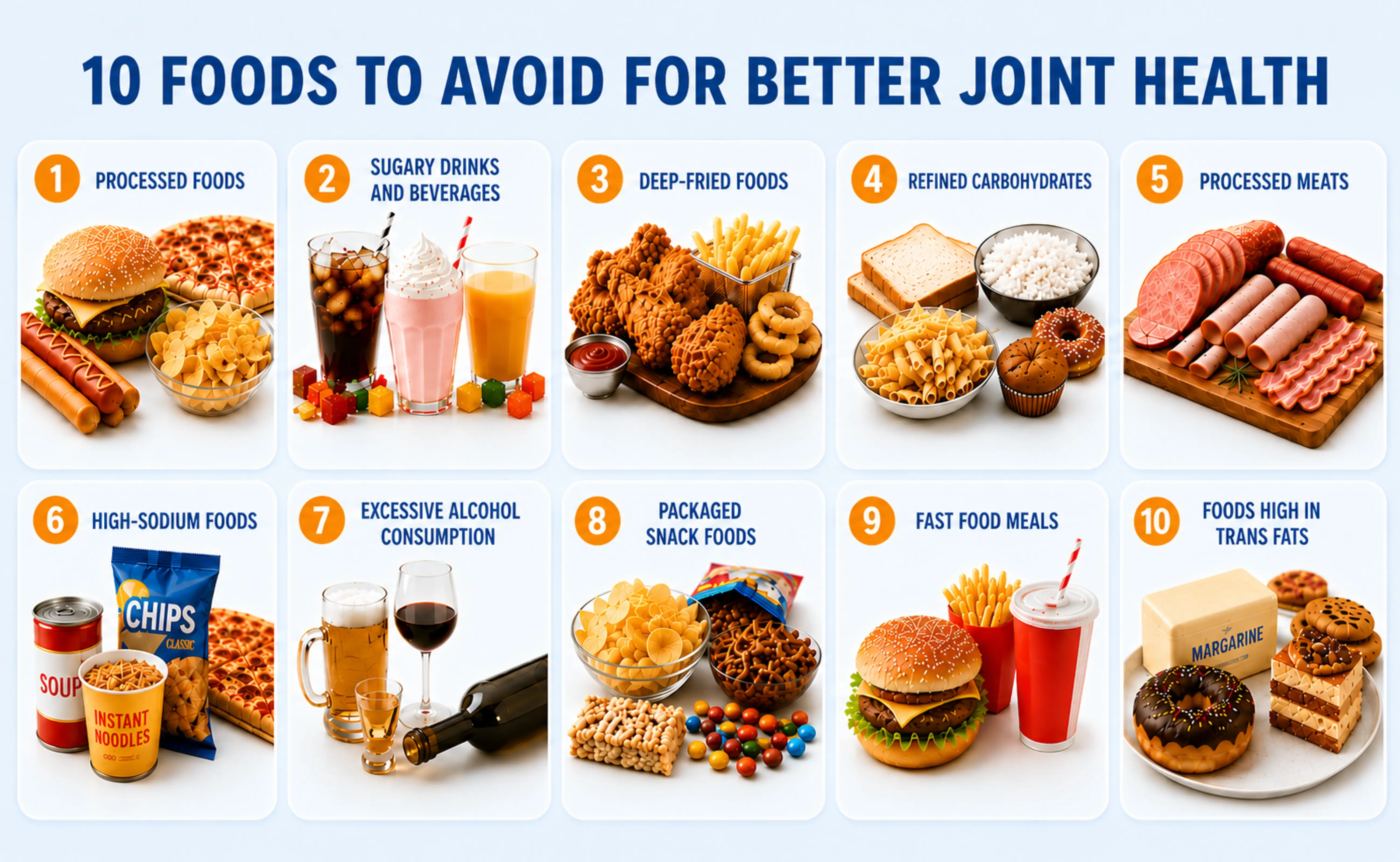
Certain foods may contribute to inflammation, weight gain, or other factors that affect joint comfort and mobility. While occasional consumption is unlikely to cause significant harm, regularly consuming the following foods may not be ideal for long-term joint health. Here are 10 foods you should avoid for healthier joints:
1. Processed Foods
Processed foods are quick and convenient; they are often lower in nutrients and higher in ingredients that may not support overall health. Frequently choosing foods such as instant noodles, frozen snacks, and packaged ready-to-eat meals can reduce the overall nutritional quality, which helps keep your joints, bones, and muscles healthy. Over time, this may affect mobility and overall well-being.
2. Sugary Drinks and Beverages
Beverages such as soft drinks, sweetened fruit juices, energy drinks, flavoured coffees, and iced teas often contain high amounts of added sugar. Regular consumption of these beverages may contribute to weight gain and can affect overall health in ways that may place additional stress on the joints. Choosing lower-sugar alternatives more often can help support better long-term joint health.
3. Deep-Fried Foods
Regularly eating foods that are high in unhealthy fats and calories may contribute to excess body weight, which can increase pressure on the joints. Over time, this added strain may affect mobility and joint comfort, especially in the knees and hips. This includes foods such as French fries, fried chicken, fried snacks, and battered fast-food items.
4. Refined Carbohydrates
Foods made with refined grains are often digested quickly and provide fewer nutrients than whole-grain alternatives. Regularly consuming foods such as white bread, pastries, cakes, cookies, white rice, and many packaged breakfast cereals may make it harder to maintain a balanced diet. Over time, dietary patterns high in refined carbohydrates can contribute to weight gain, which may place additional stress on the joints and affect overall mobility.
5. Processed Meats
Processed meats often contain preservatives, sodium, and other additives that may not support long-term joint health when consumed regularly. Excessive intake has also been associated with various chronic health concerns.
6. High-Sodium Foods
Foods that are high in sodium, like canned soups, processed meats, instant noodles, packaged sauces, pickles, and salty snacks, can cause your body to retain fluid. This might lead to more swelling and discomfort if you have joint issues. Eating too much salt over time can also impact your overall health and mobility.
7. Excessive Alcohol Consumption
Drinking too much alcohol, whether it’s beer, wine, spirits, cocktails, or other alcoholic drinks, can trigger inflammation in your body and affect your overall health, especially if it becomes a habit. Alcohol can also dehydrate you, which may impact your joints and the tissues around them.
8. Packaged Snack Foods
Convenient grab-and-go snacks are often highly processed and may contain refined carbohydrates, excess sodium, unhealthy fats, and artificial additives. Regularly relying on these foods can reduce the overall nutritional quality of your diet, which may not support long-term joint health. Some of the common examples include potato chips, cheese puffs, flavoured crackers, packaged popcorn, and similar snack products.
9. Fast Food Meals
Eating restaurant-style convenience meals frequently can make it difficult to maintain a balanced diet. These foods are often calorie-dense and may contribute to weight gain over time, which can place additional stress on weight-bearing joints such as the knees and hips. Burgers, pizzas, fried chicken meals, loaded fries, and sugary soft drinks are some of the most commonly consumed examples.
10. Foods High in Trans Fats
Although the use of industrial trans fats has declined in recent years, some processed foods may still contain partially hydrogenated oils. Health experts generally recommend limiting these fats because they have been associated with inflammation and poor cardiovascular health. Certain packaged baked goods, commercial pastries, doughnuts, cookies, pie crusts, and processed snack products can still be sources of trans fats.
What Foods and Eating Habits Can Help Support Healthy Joints?
While certain foods may contribute to joint discomfort, your overall eating pattern plays a much bigger role in supporting long-term joint health. Aim to build a balanced diet that provides the nutrients your joints, muscles, and bones need to function well. The following habits can help support joint health and mobility over time:
- Fill your plate with a variety of fruits and vegetables, including antioxidant-rich options such as berries, spinach, and broccoli.
- Include sources of omega-3 fatty acids, such as salmon, sardines, walnuts, and flaxseeds, which may help support overall joint health.
- Choose whole grains like oats, brown rice, and whole wheat products more often than refined carbohydrates.
- Drink enough water throughout the day to support healthy tissues and overall body function.
- Maintain a healthy body weight to help reduce pressure on weight-bearing joints such as the knees and hips.
- Whenever possible, opt for home-cooked meals made with fresh ingredients rather than heavily processed foods.
When Should You See a Doctor for Joint Pain?
If you experience severe joint pain, it’s important to see a doctor, especially if the pain lasts more than a few days, keeps returning, or is accompanied by symptoms such as swelling, redness, warmth, fever, or difficulty moving the joint. While occasional joint discomfort may occur after physical activity, persistent symptoms could indicate an underlying condition that needs medical attention. Early evaluation can help identify the cause, alleviate symptoms, and prevent further joint damage.
Final Word
Your daily diet plays a crucial role in maintaining overall joint health. The specific foods you choose to eat can greatly influence various factors, such as your body weight, the levels of inflammation in your body, and the availability of essential nutrients that support the health of your joints and the surrounding tissues. If you are experiencing persistent joint discomfort, swelling, stiffness, or recurring pain, Dr. Kunal Patel can help you identify the cause and recommend a personalised treatment approach.
FAQ’s
1. What foods are bad for joint health?
Highly processed foods, sugary drinks, trans fats, and excessive sodium may negatively affect joint health.
2. Can diet really affect joint pain?
Yes, certain dietary habits may influence inflammation, body weight, and joint discomfort.
3. Are sugary drinks harmful for people with joint pain?
Frequent consumption of sugary beverages may contribute to inflammation and weight gain.
4. Which foods can help support healthy joints?
Foods rich in omega-3 fatty acids, antioxidants, and whole grains may support joint health.
5. Can losing weight help reduce joint pain?
Maintaining a healthy weight can reduce stress on weight-bearing joints such as the knees and hips.
6. Are processed foods linked to inflammation?
Many processed foods contain ingredients that may contribute to inflammatory responses in the body.
7. When should I see a doctor for joint pain?
Medical evaluation is recommended if joint pain persists, worsens, or affects daily activities.
8. Can dehydration affect joint health?
Staying adequately hydrated supports overall joint and tissue function.
9. Are occasional cheat meals harmful to joint health?
Occasional indulgences are unlikely to have the same impact as long-term dietary habits.
10. Who can help diagnose the cause of joint pain?
Dr. Kunal Patel provides evaluation and treatment for a wide range of joint-related conditions. Through a comprehensive assessment, he can help identify the underlying cause of joint pain and recommend an appropriate treatment plan based on your symptoms and diagnosis.